







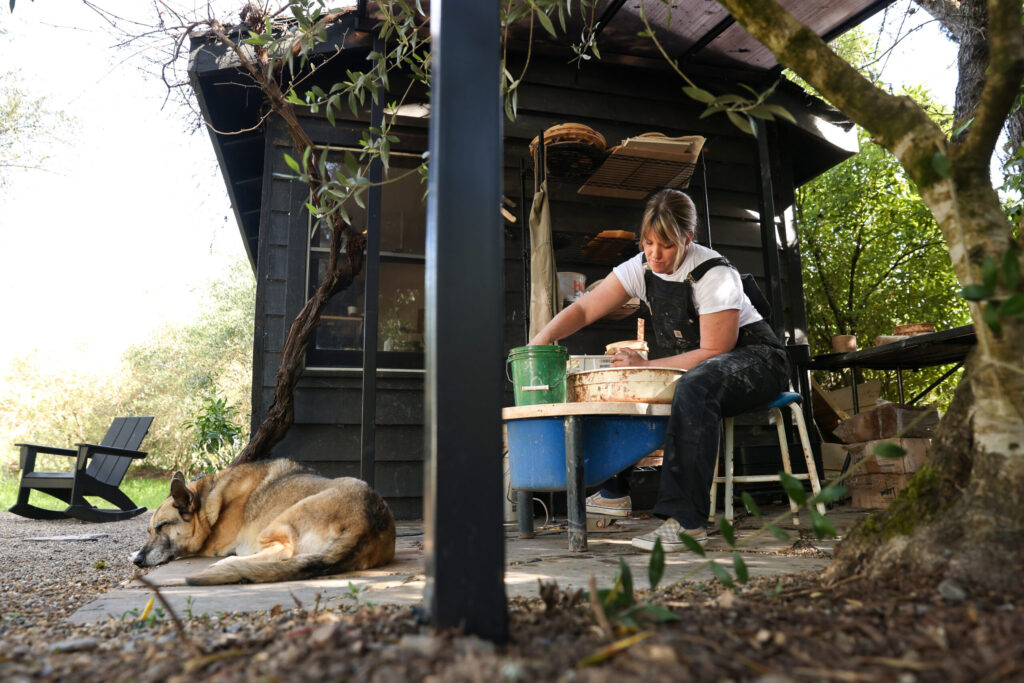
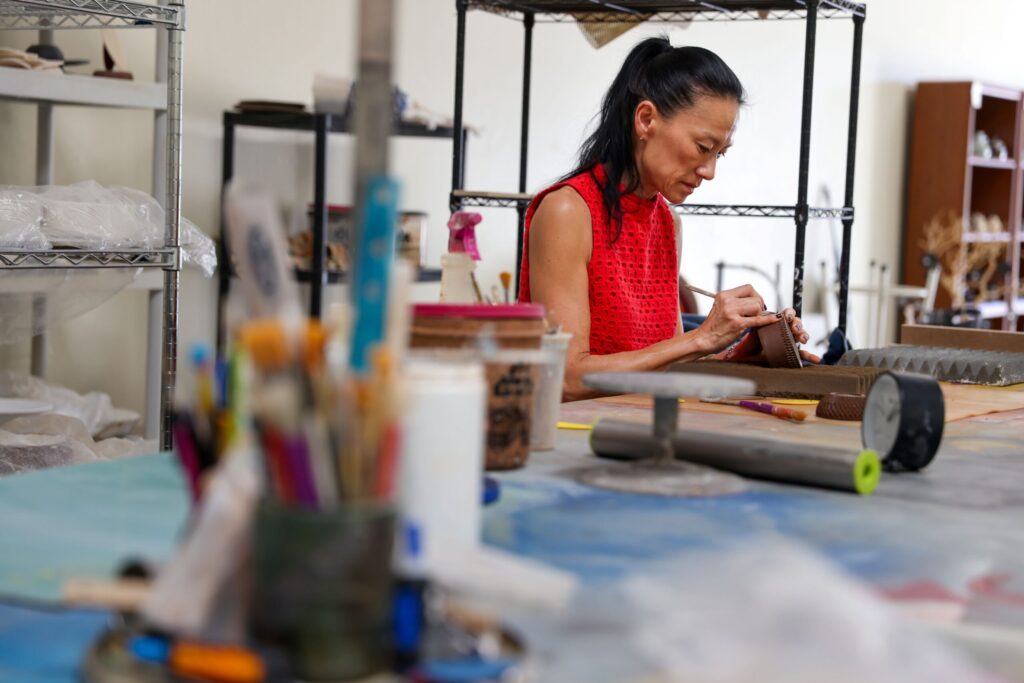

Sitting outside her tree-ringed home pottery studio in Santa Rosa, Hannah Allen recalls the exact moment the life she’s now made for herself began to take shape. The Sonoma County native and owner of Olivet Ceramics was tending bar at State Bird Provisions in San Francisco when a customer off-handedly mentioned Heath Ceramics, the esteemed tableware maker founded in Sausalito nearly 80 years ago.
“She was like, ‘I’m the plateware representative. I fly around and talk to chefs about their plateware needs.’ I was like, ‘That’s a job? Oh my God,’” says Allen, who is clad in the clay-stained Carhartt overalls she typically wears on days spent at her pottery wheel. “So that was the first seed.”
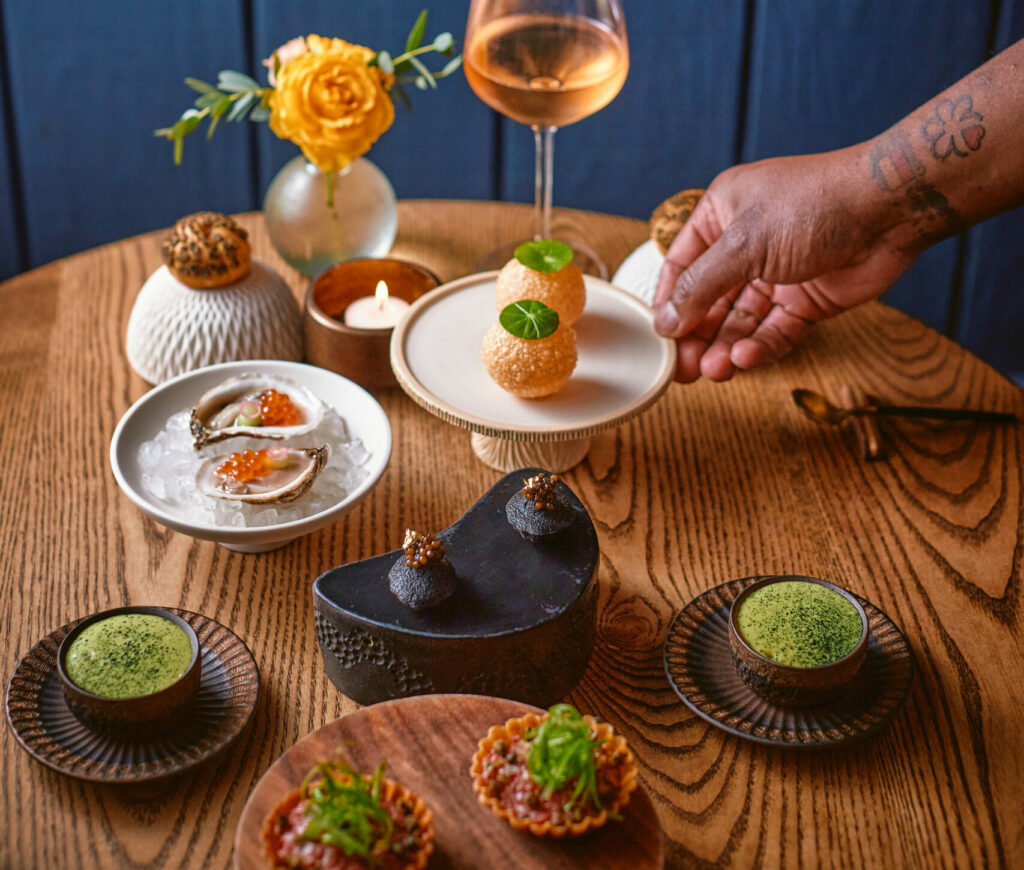
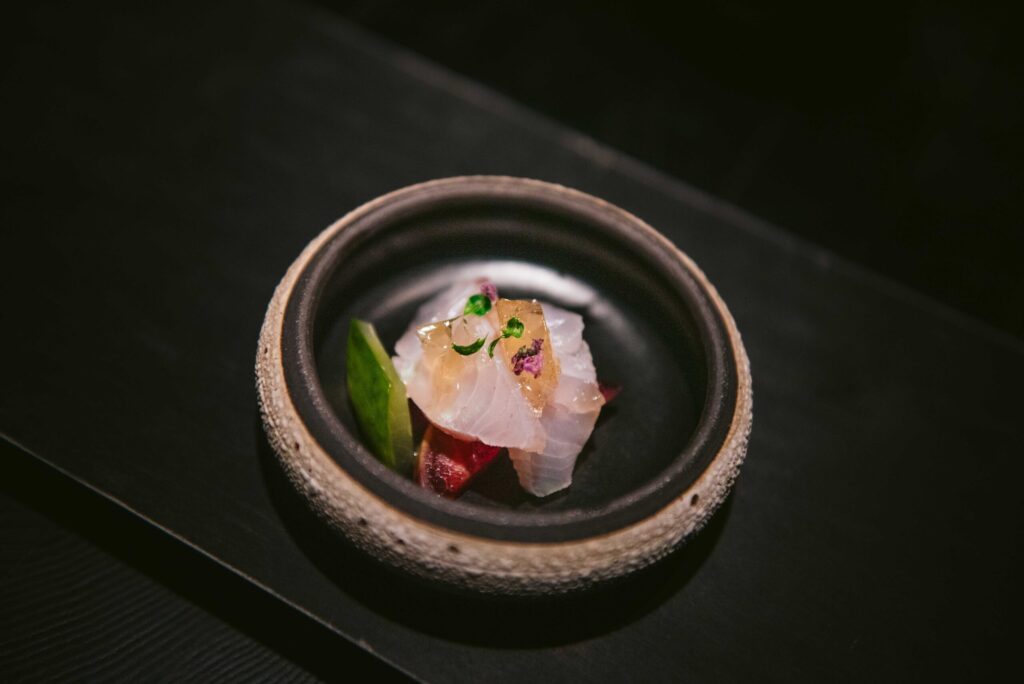
Allen and Healdsburg’s Jee Park both craft ceramic pieces for some of the finest restaurants in Sonoma County and beyond, yet these two artists followed wildly different paths toward taking their place at those acclaimed tables.
A longtime restaurant veteran, Allen began crafting her own pieces when she was laid off during Covid, and she started taking classes at Clayfolk, a studio an old friend had opened in Occidental.
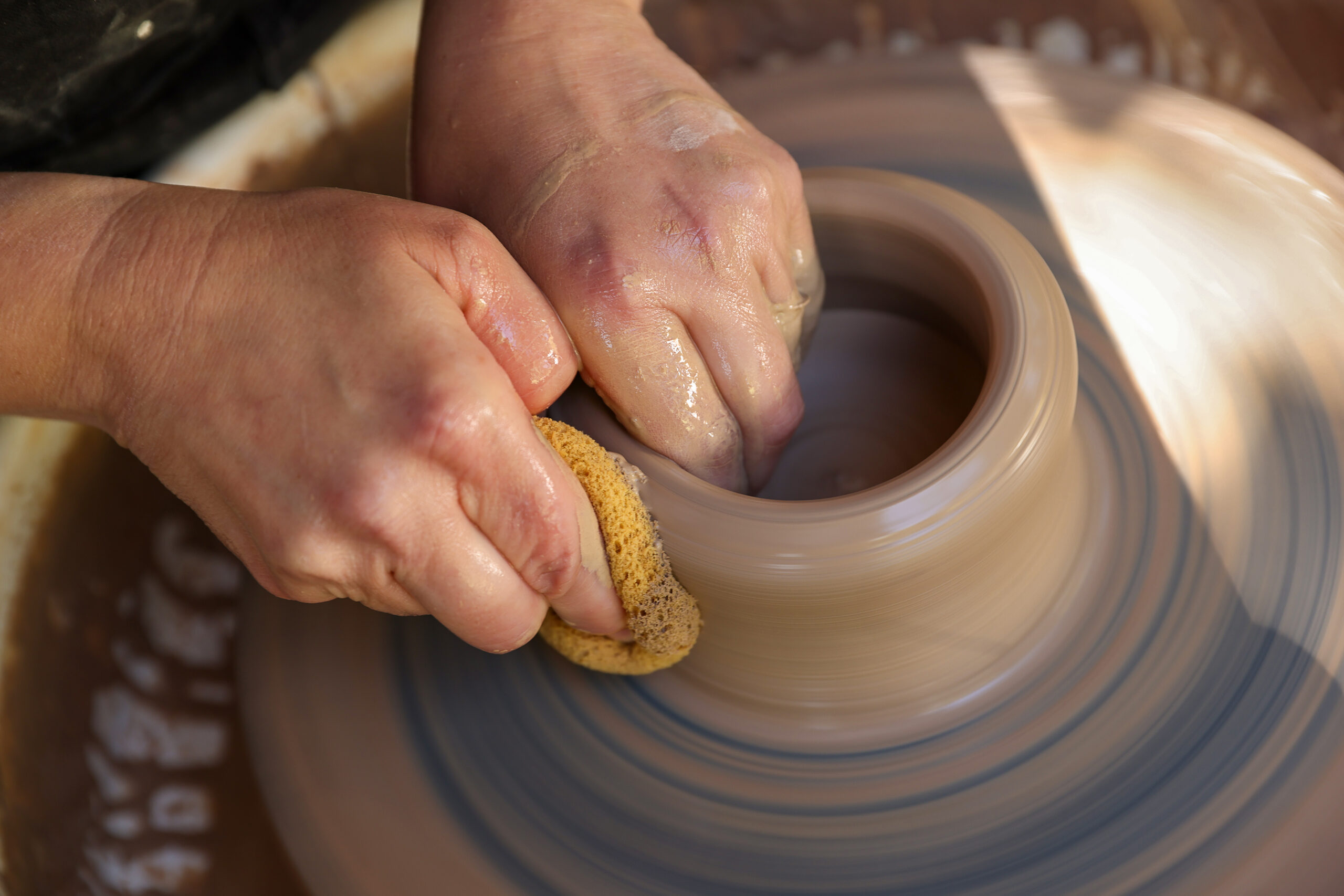
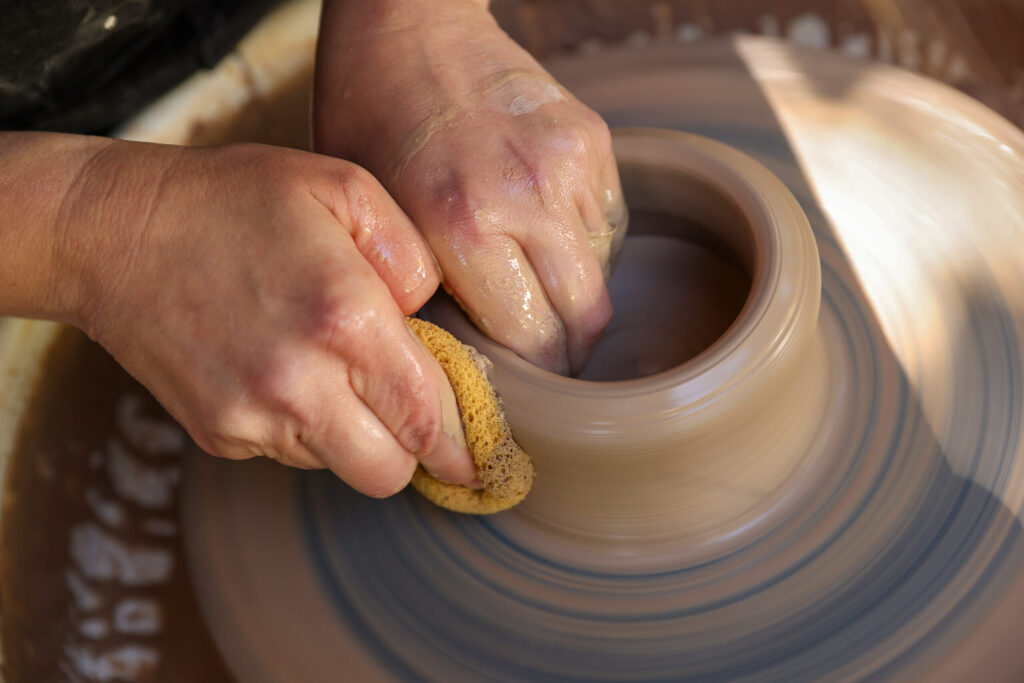
“I was wrestling clay off the wheel. It was falling off, it was messy, it was ugly, I had a mask on—it was terrible,” she says, laughing. “I just decided that this was going to be my meditation, because I needed a break from real life. In Occidental, I didn’t get any [cell] service, and I was like, ‘This is good for me to have this quiet time.’ And all of a sudden, that’s where I was spending all of my time. I could not get away.”
In 2021, she took a job at SingleThread, where she still works as rooftop captain, leading the service team on the roof deck. Looking at and handling the three-Michelin-starred restaurant’s plateware on a daily basis proved inspirational, and she often brought her own pieces in to give to co-workers.
“At SingleThread, there’s the principle of kaizen—one good change every day to make improvements,” she says. “Being surrounded by that principle while creating art, I was like, if I can just kaizen every day and kaizen each piece, I can keep doing this.”
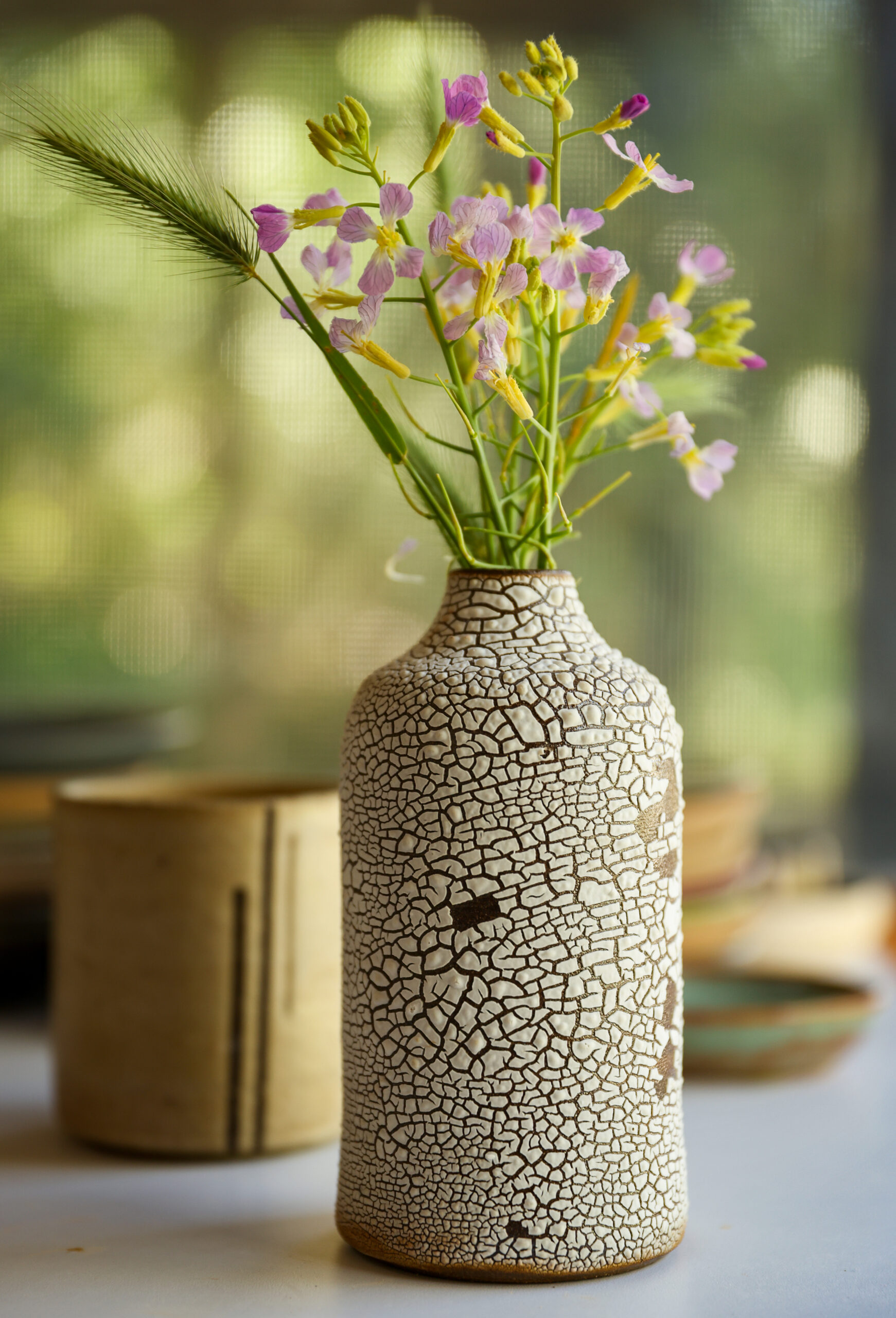
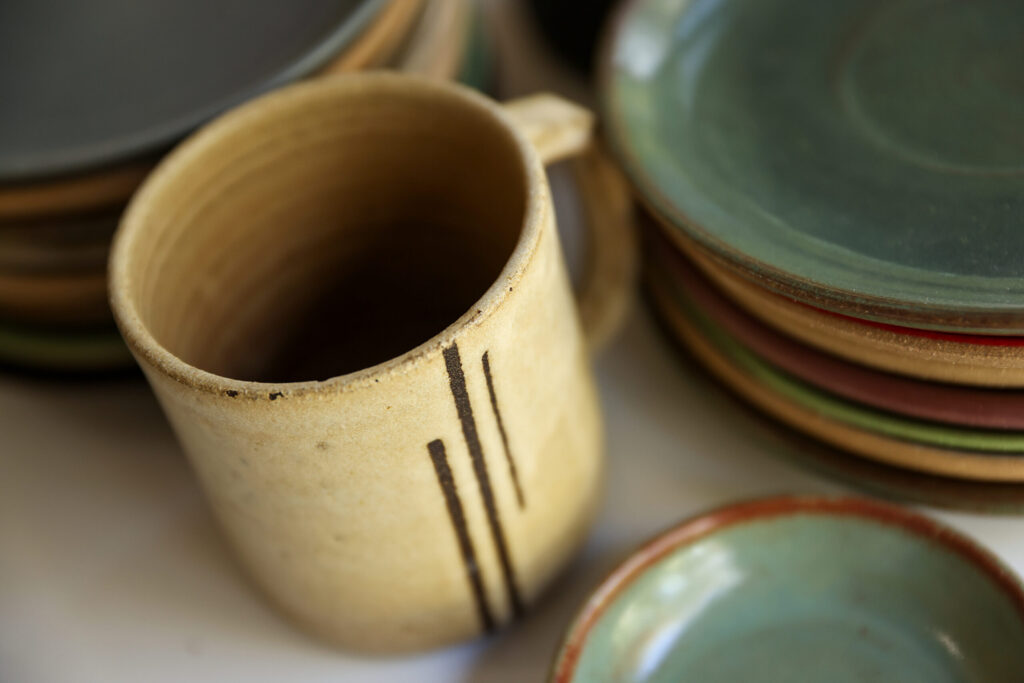
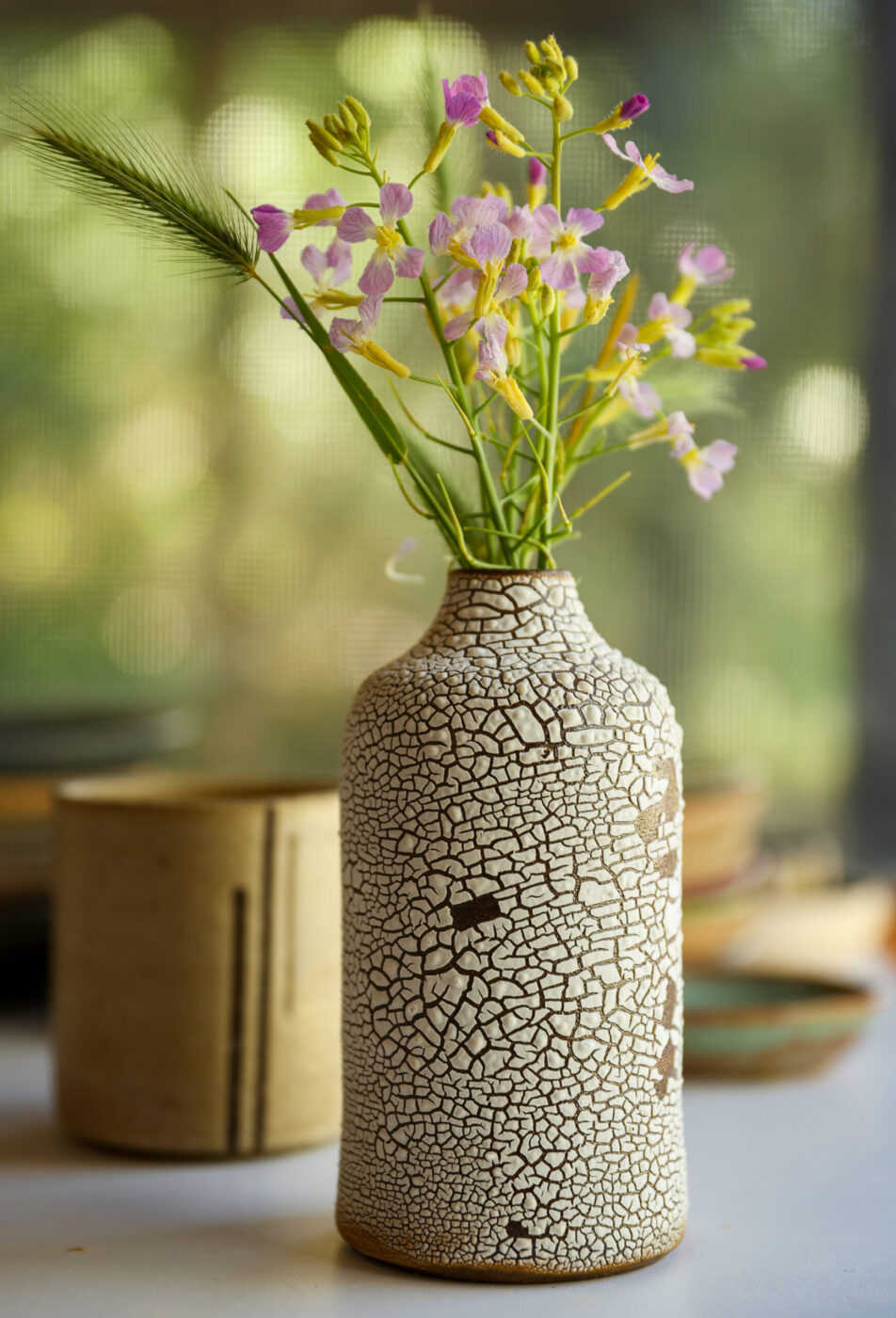
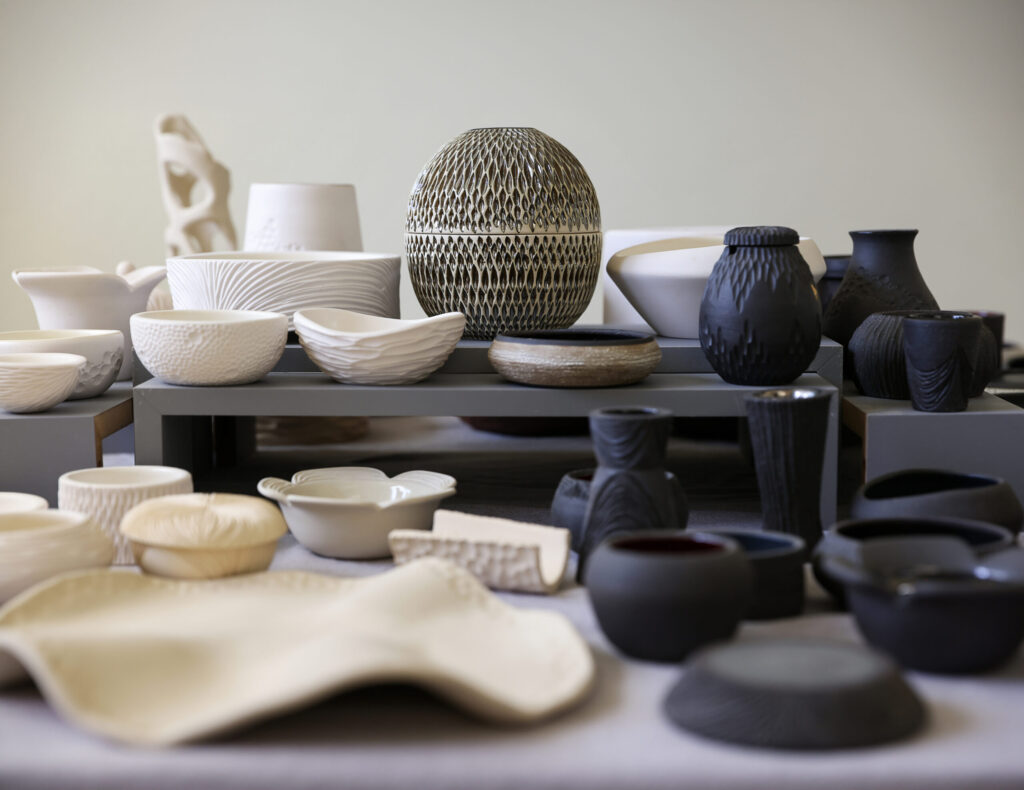
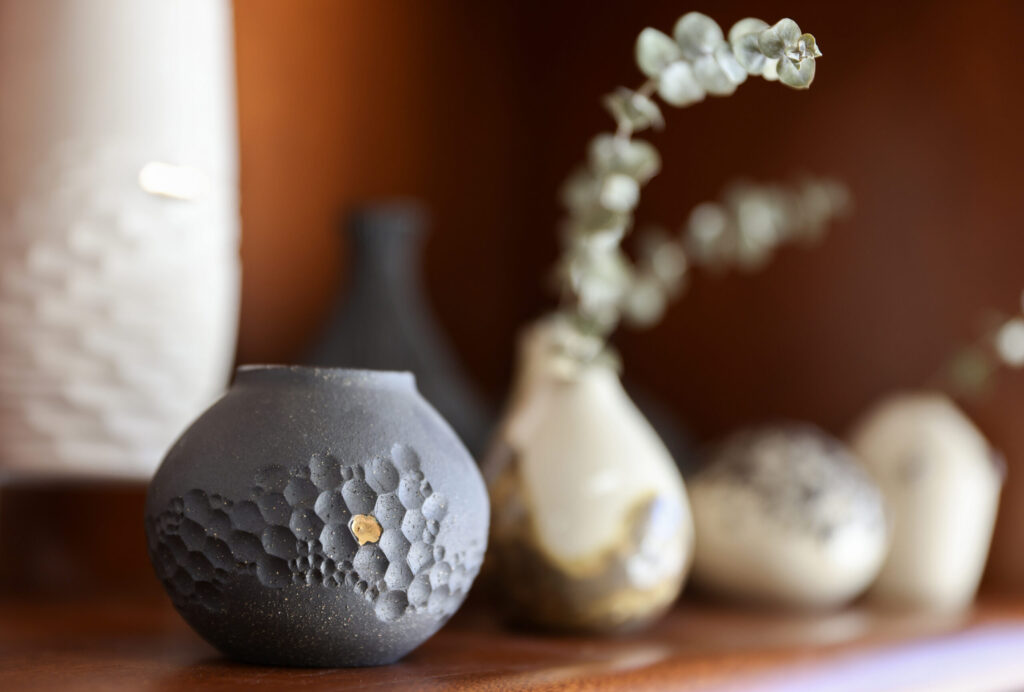
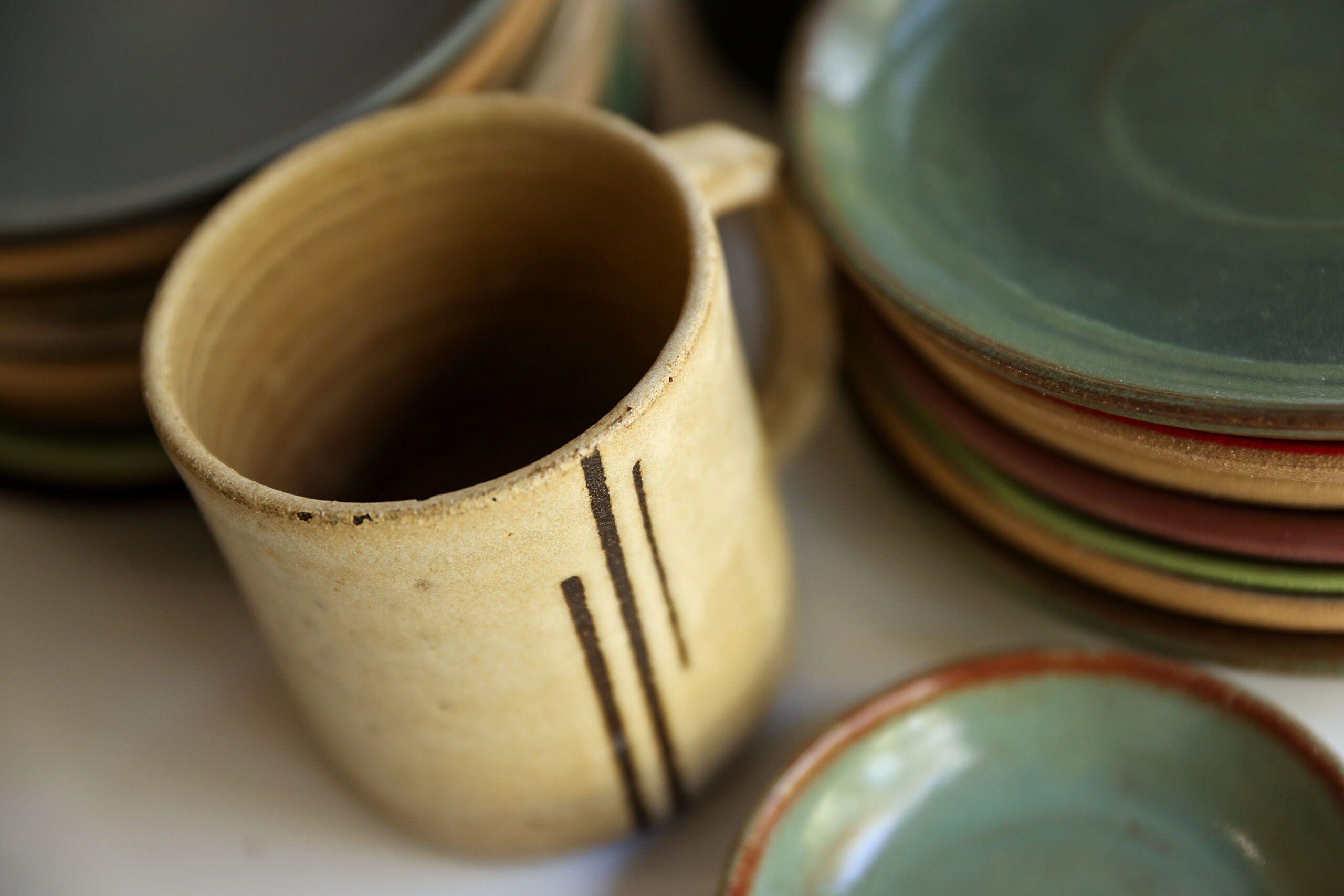
Keep on she did, firing and glazing clay mugs, plates, vases, and more in a variety of earth tones, each piece with a tactile, slightly imperfect, wabi-sabi feel. When SingleThread’s owners briefly partnered in the opening of Little Saint in 2022, co-owner Katina Connaughton asked Allen to make vases for the flower program. Around the same time, Melissa McGaughey, who co-owns Quail & Condor and Troubadour Bread & Bistro and uses Allen’s plateware at the restaurants, offered to sell her pieces at Quail & Condor. “She gave me two shelves, and it was gone, just like that,” Allen says.
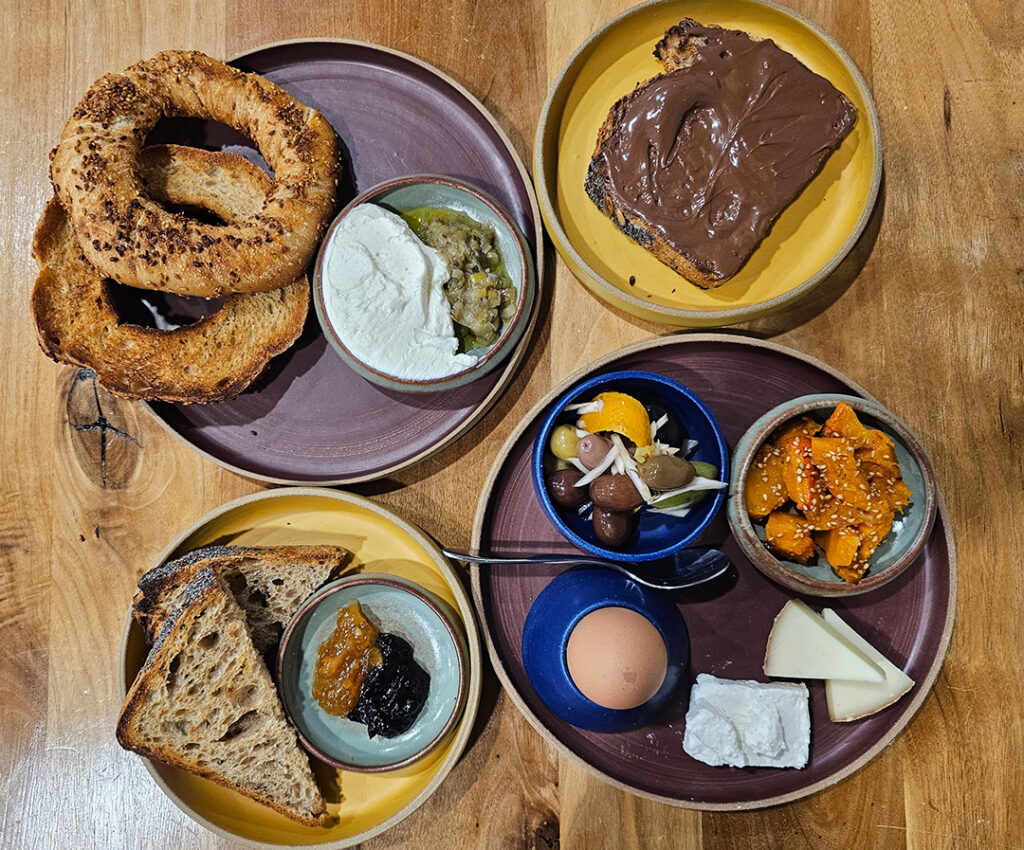
“Hannah has a unique style,” McGaughey explains. “There’s a feminine feel to it—a softness to the bold colors and weight to the shape. Hannah’s ceramics [at the restaurants] are from a color palette based on a Turkish rug, to showcase our influence from my Turkish heritage. The food has a more complete story when paired with plateware that reflects the founders.”
McGaughey also notes the simplicity of those pieces for everyday use. Functionality is a key consideration for Allen, an approach gleaned from her years of restaurant work.
“As a service industry professional,” Allen says, “I’m like, ‘Are you ready for the high volume that’s going to be put on these plates? Here’s what I think we should do if you’re going to be passing them to people. Here’s what’s going to be easiest to clear.’ I’m always advocating for the ease of it.”
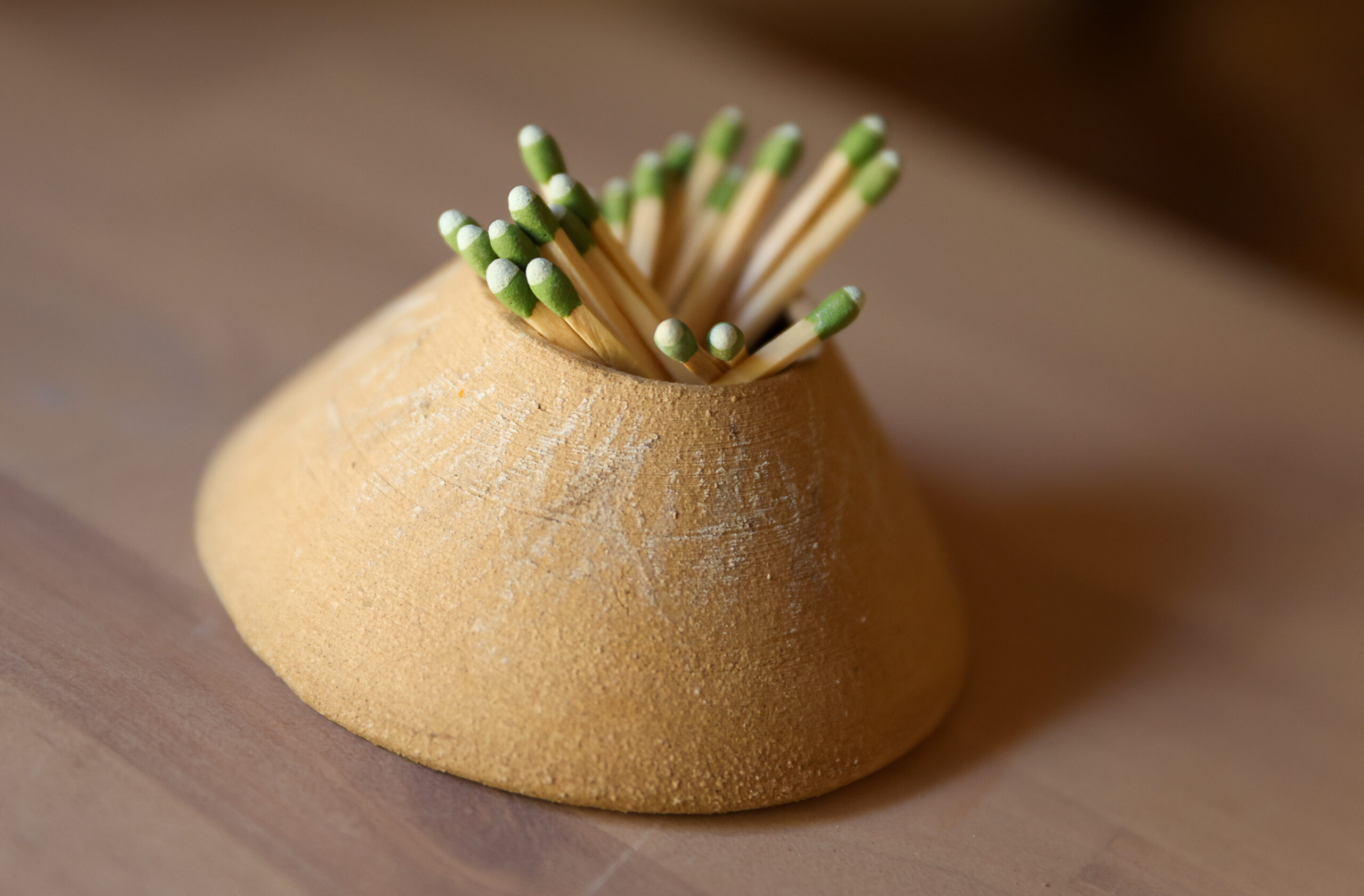
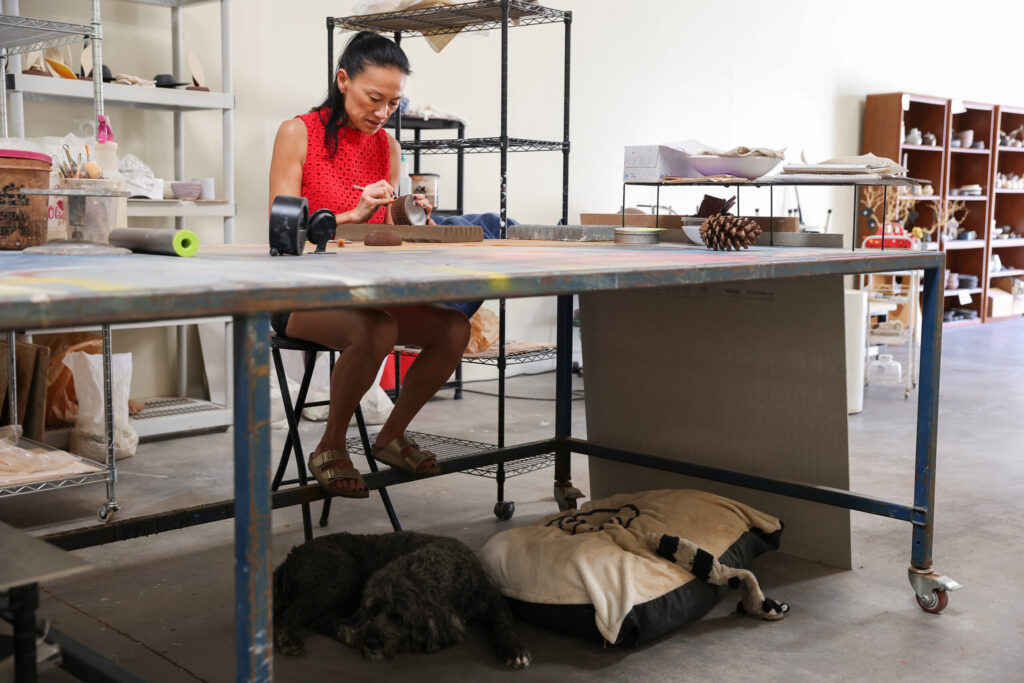
Jee Park also emphasizes practicality when making ceramics, although her style is distinct from Allen’s, and her career path even more circuitous. The proprietor of Healdsburg’s Seoul Sister Studio immigrated to the U.S. at age 4, growing up in the Chicago area in what she calls “a pretty stereotypical kind of Korean family, where academics were really important.”
Park obliged, earning a degree in mechanical engineering from MIT. She confesses she didn’t much like engineering, so she became a high school math teacher, first in New Jersey and then San Francisco. Later, she went to graduate school at Stanford, which led to her becoming an interaction designer at Yahoo in the early 2000s. Her love for ceramics bloomed in part due to a phenomenon many Bay Area residents can relate to—rush-hour traffic.
“I was living in the Haight, driving down to Sunnyvale, which is a bear,” recalls Park, sitting on a couch with her dog in her expansive warehouse studio in downtown Healdsburg. “In order to break up the commute on the way home—and, I think, in response to me making digital things that weren’t physical—I stopped at the Palo Alto Art Center to take classes. That’s how I started ceramics, and I just completely fell in love with it.”
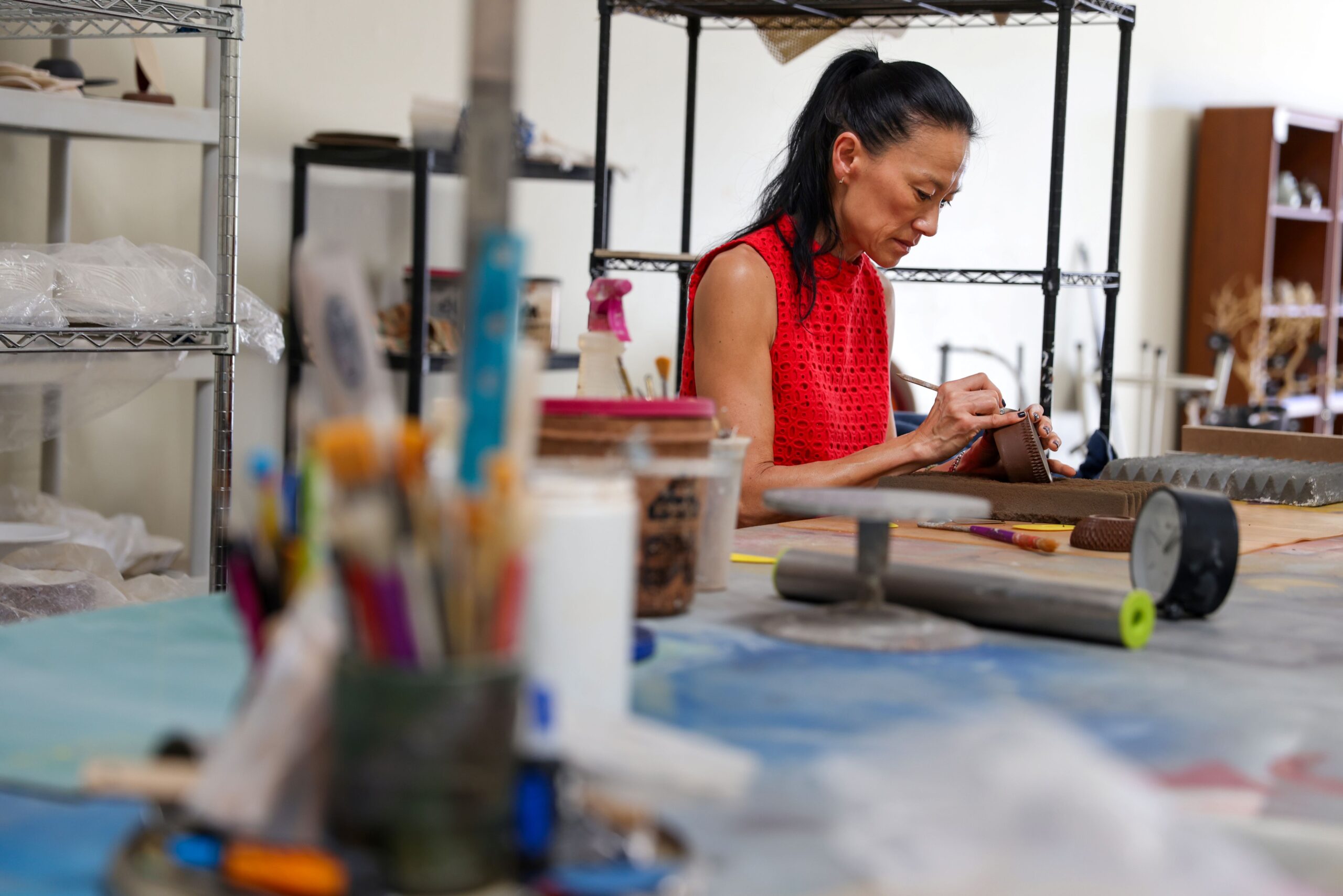
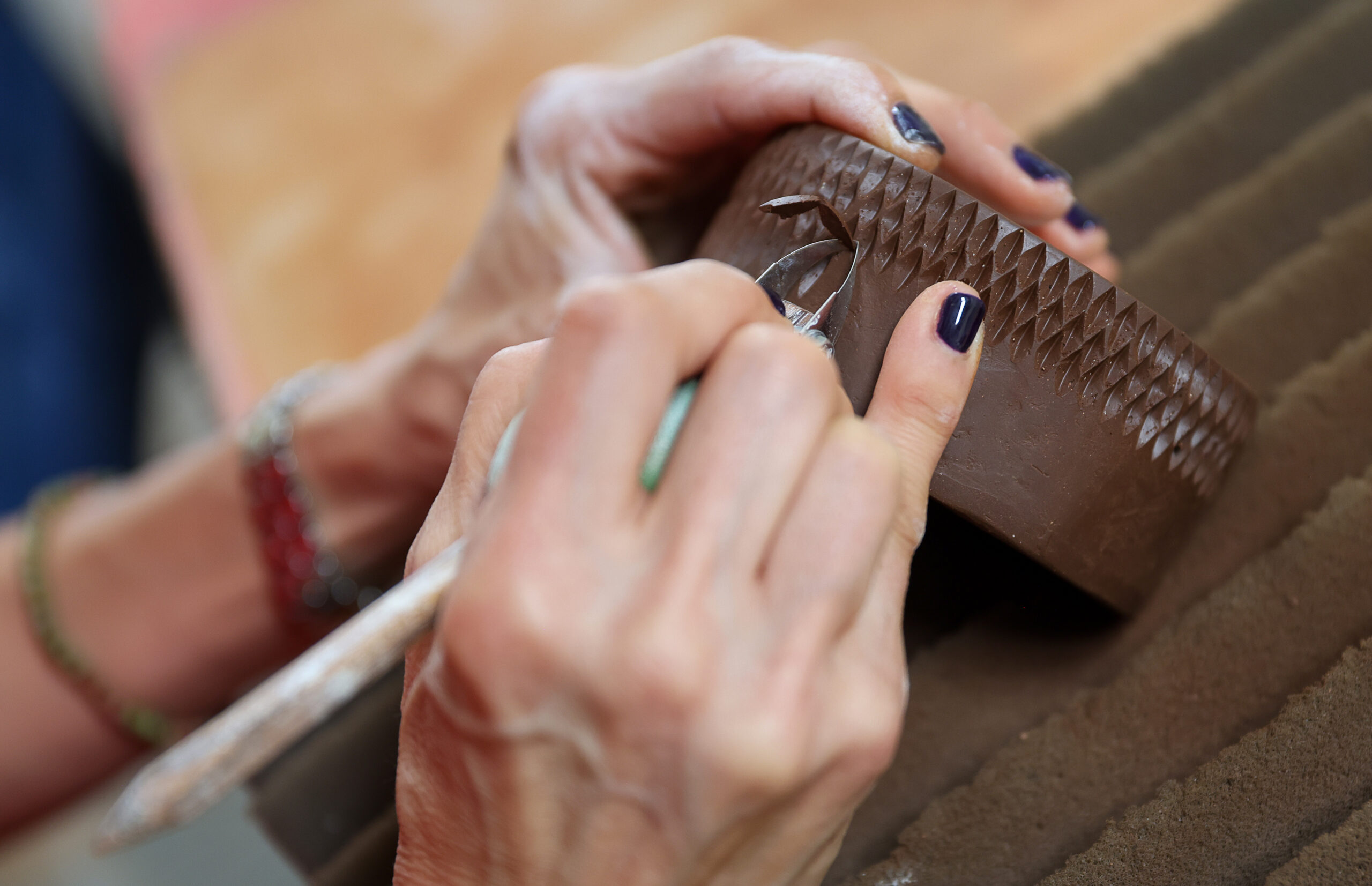
While Park enjoyed the tactile aspect of the art form, she also found a synergy between ceramics and the user interface work she did in the software world.
“I love to solve problems,” she says. “You think about restaurants—especially in San Francisco—their kitchens are fairly small, and you’ve got to think about the footprint of the piece, and about whether they’re going to be handwashed or if they’re going to be dishwasher-safe. I don’t just think, ‘Oh, it’s beautiful’; it’s got to actually work, too.”
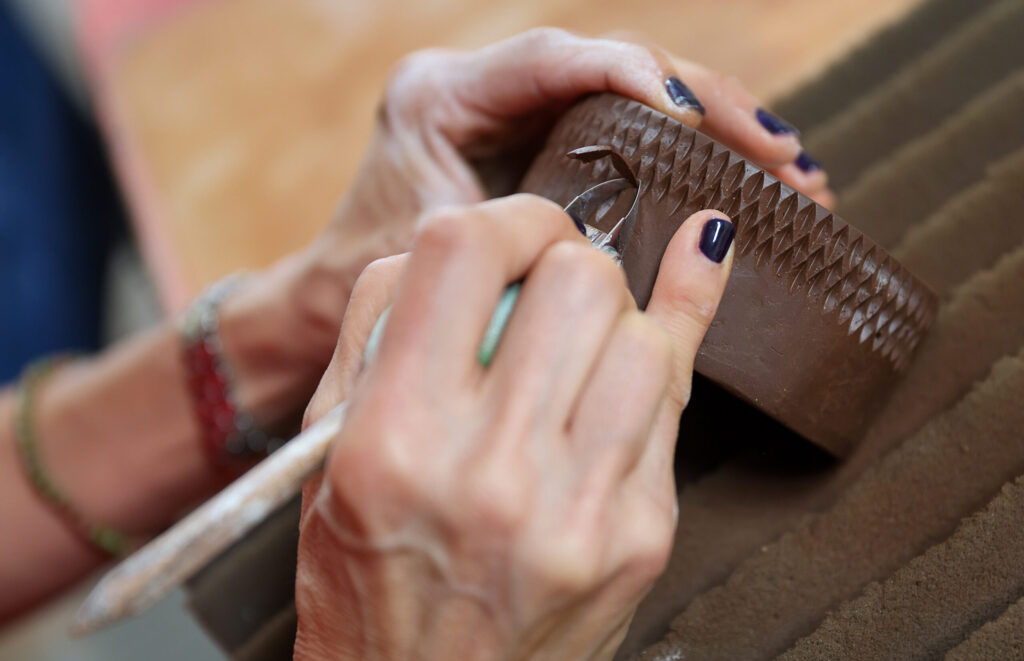
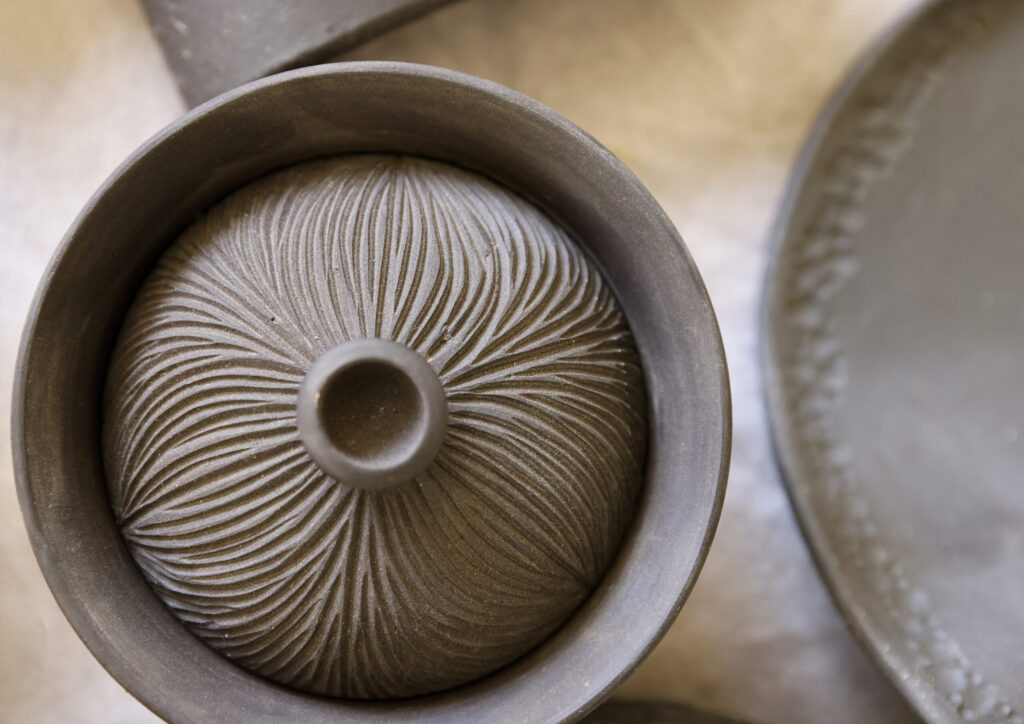
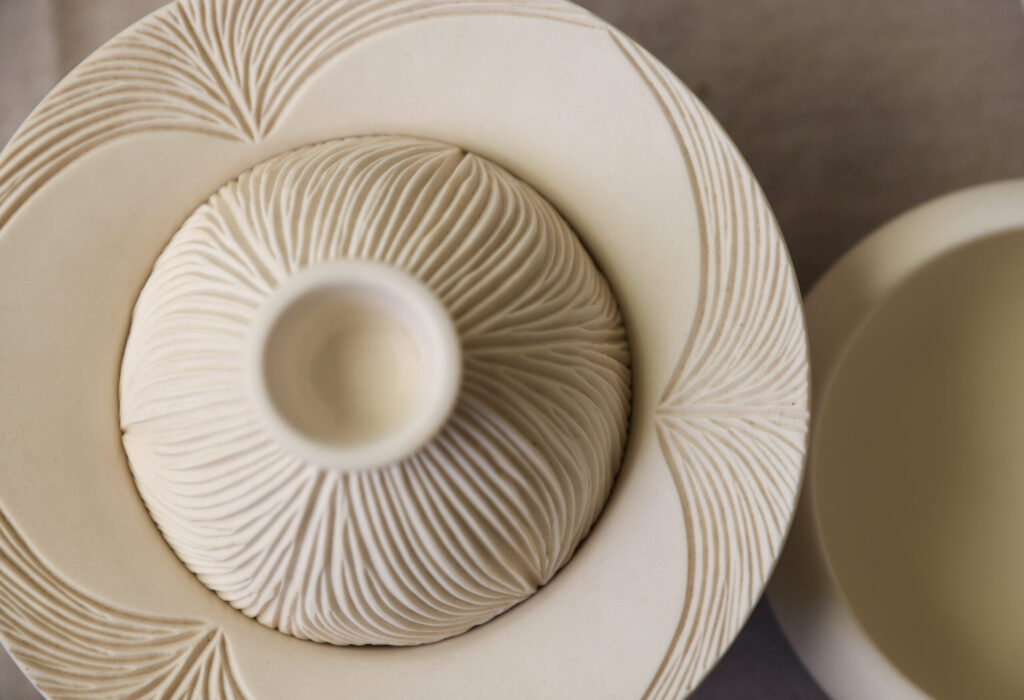
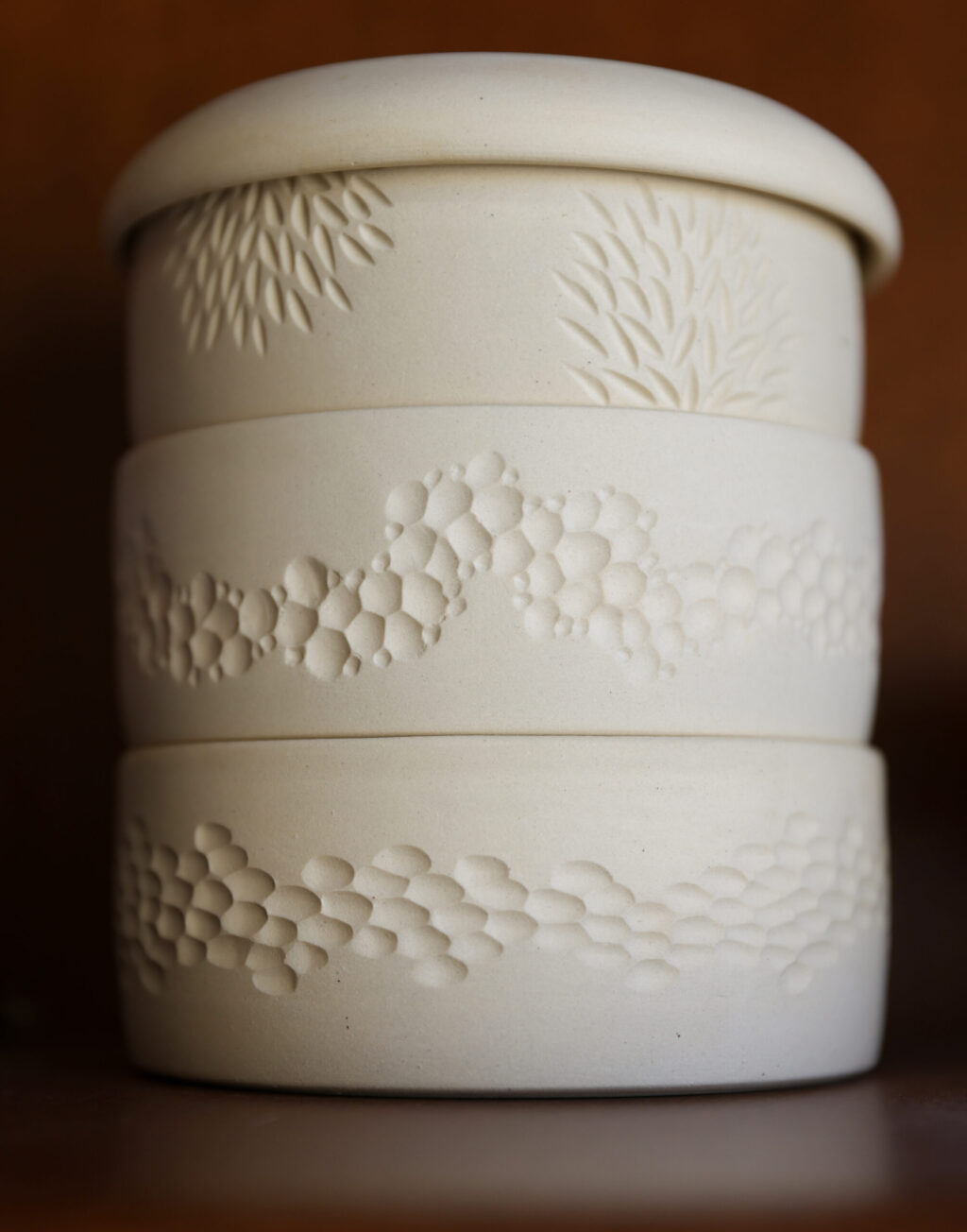
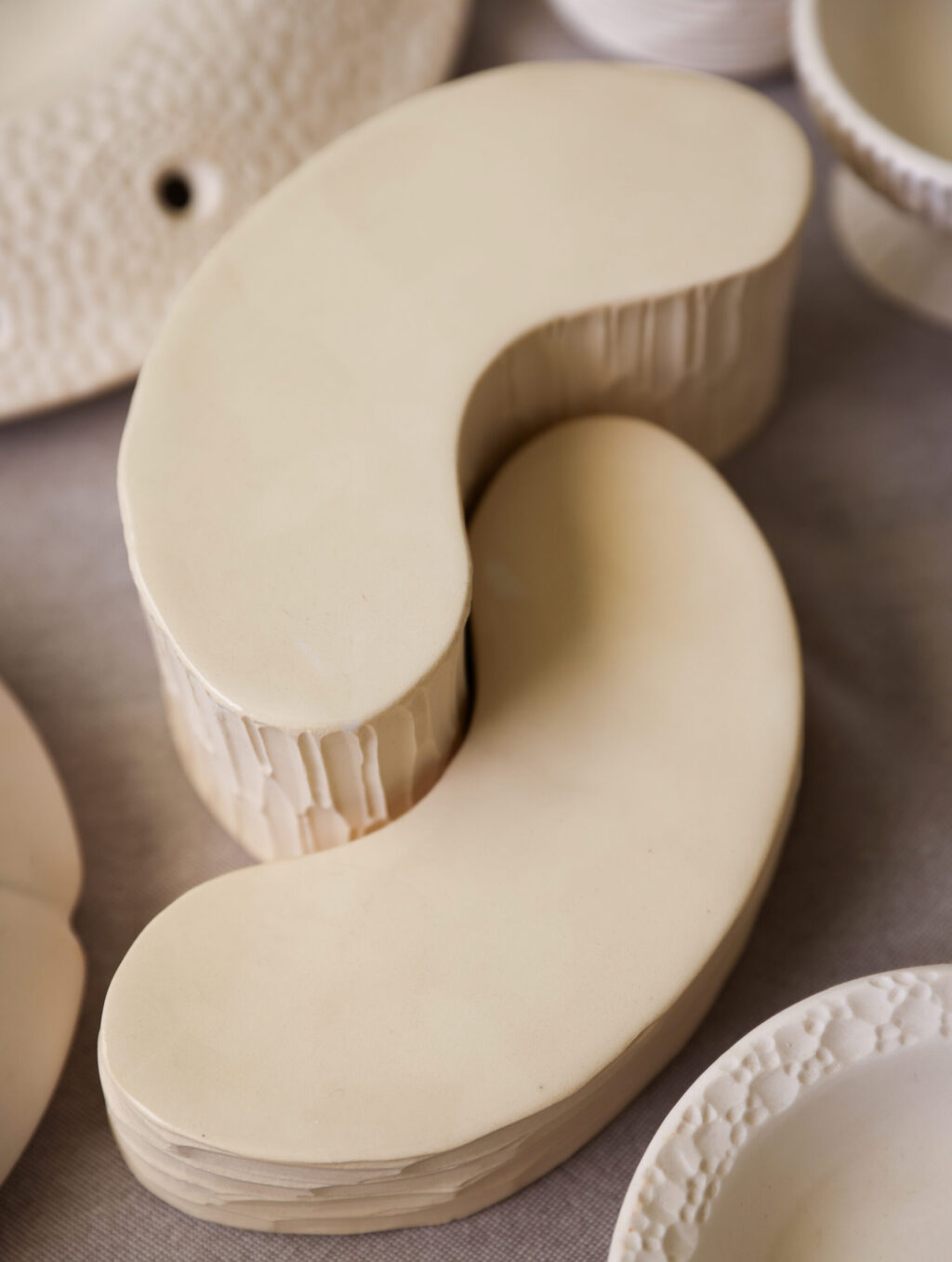
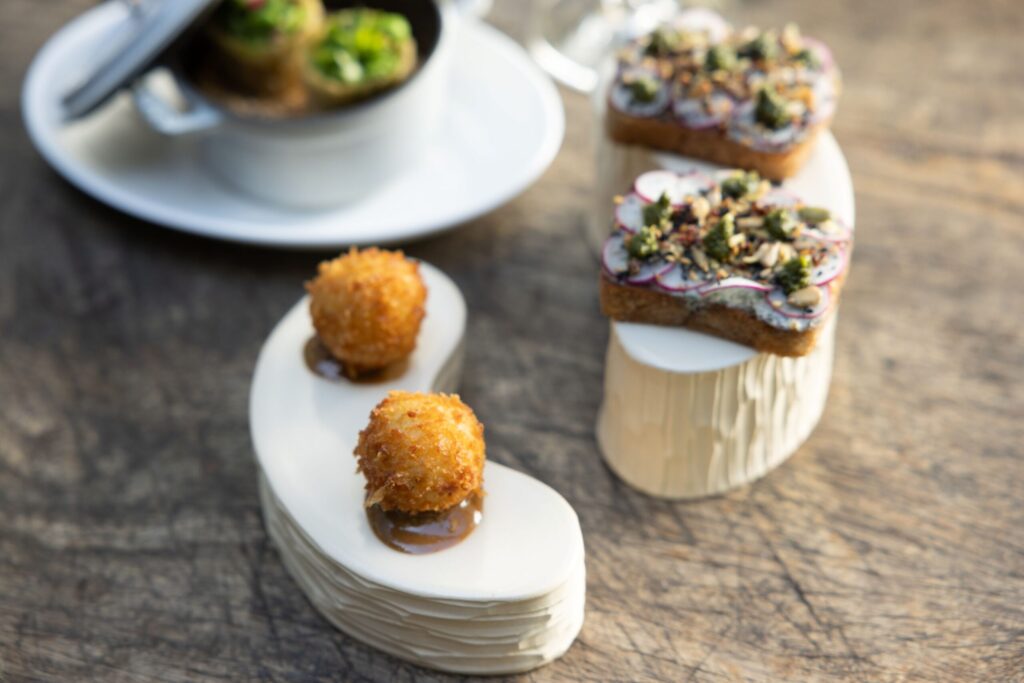
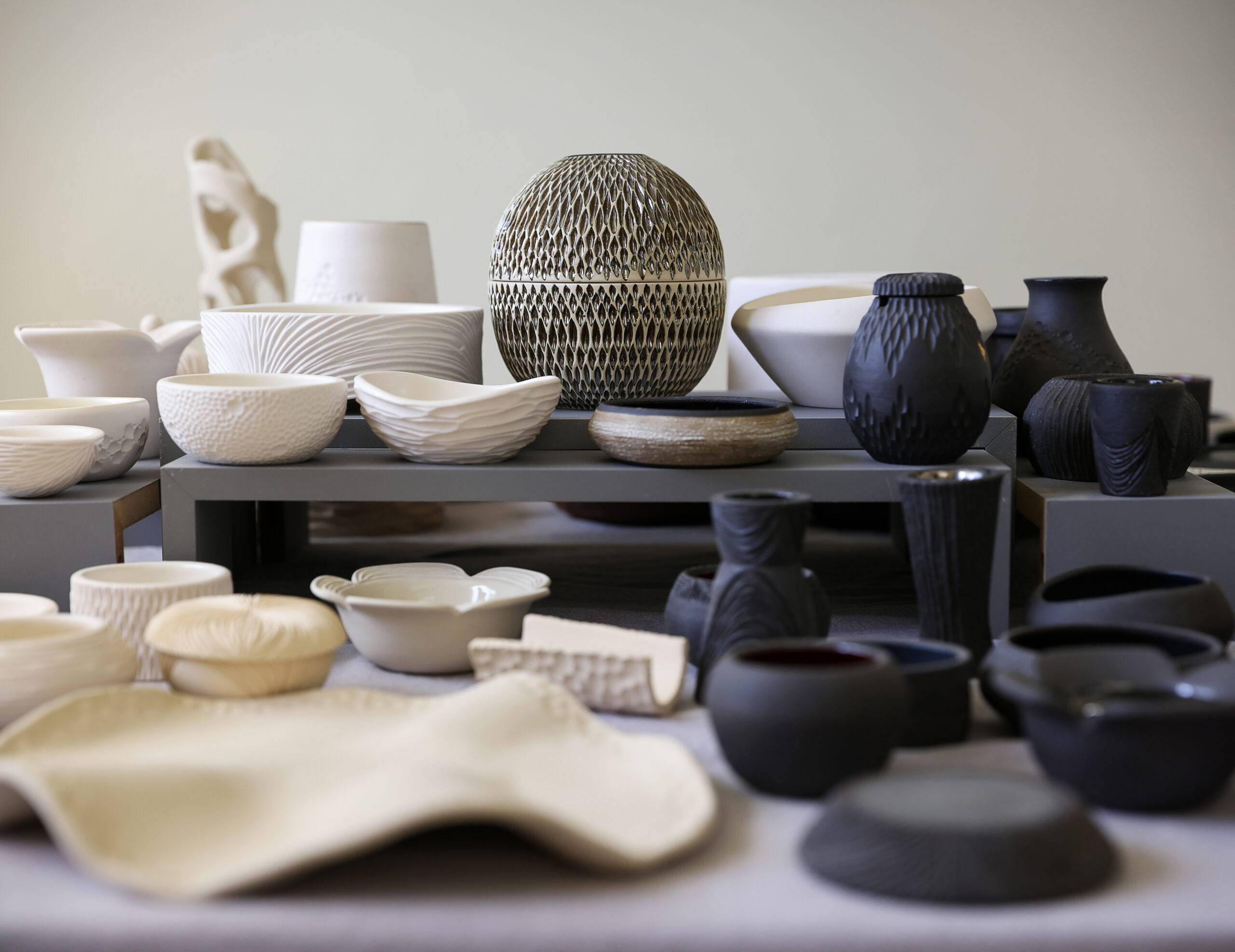
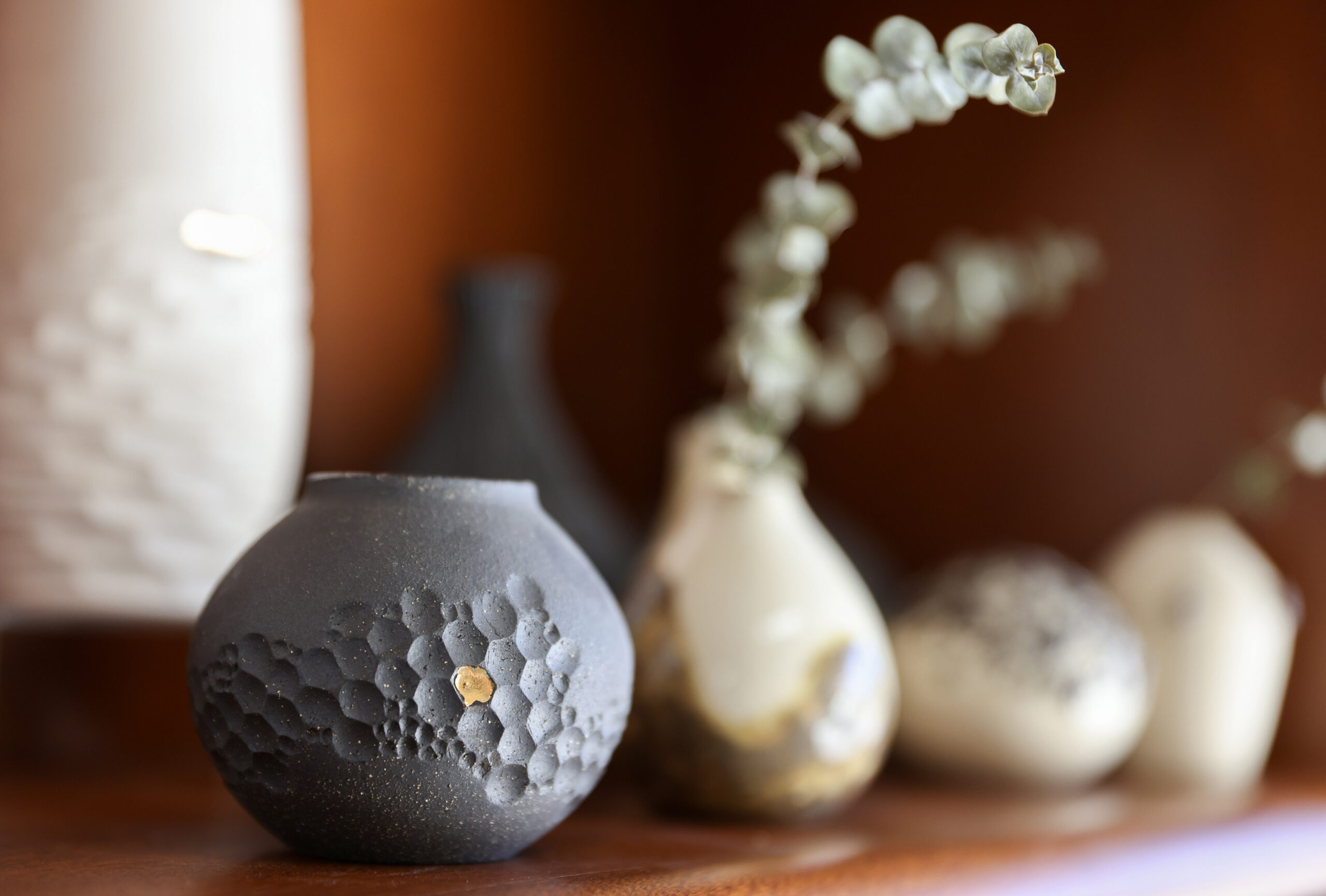
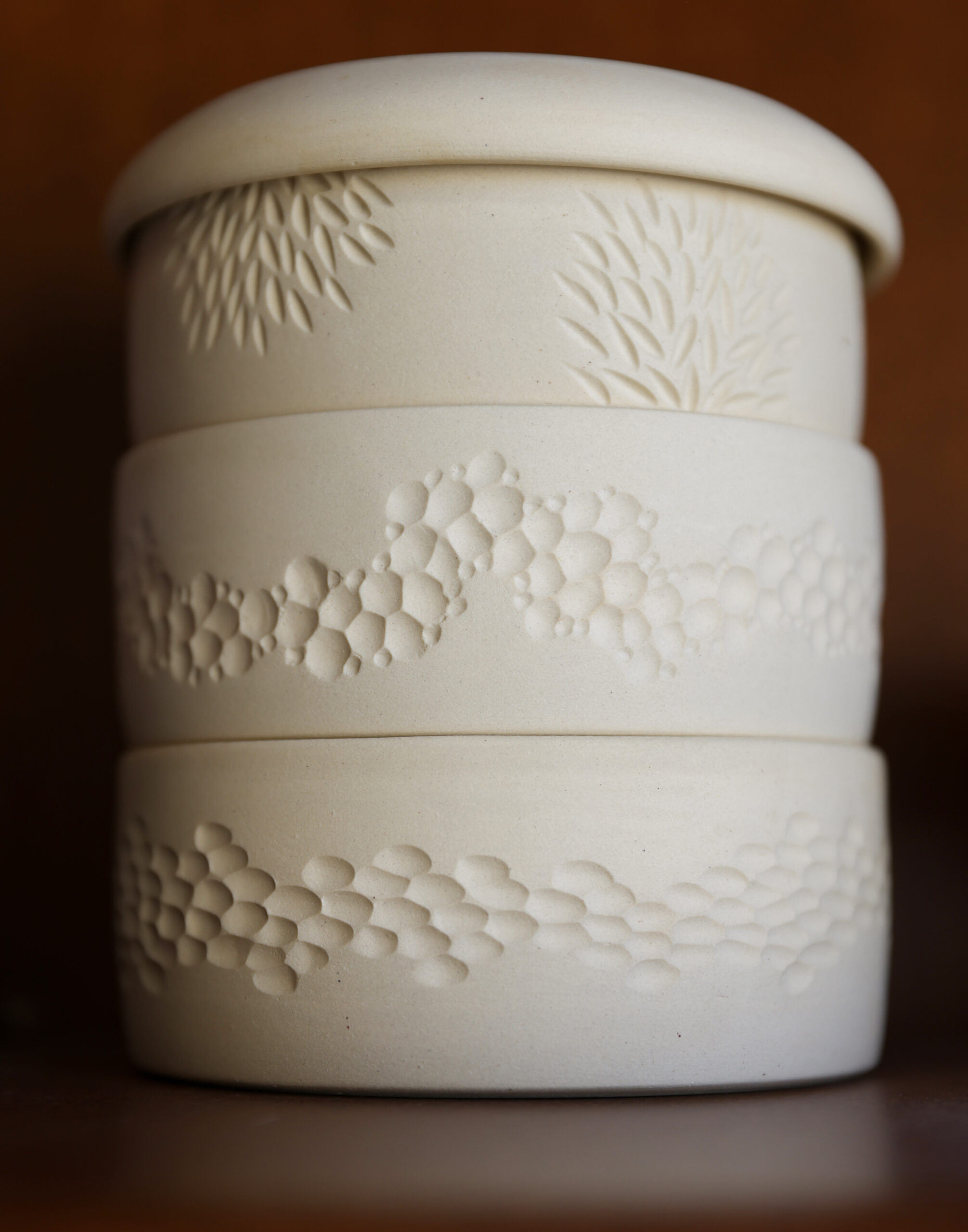
Park’s work may be functional, but it’s not simple. She is inspired by architecture, citing the free-flowing structures of Gaudí and Gehry, an influence that can be seen in pedestals she designed for Dry Creek Kitchen. Many of her pieces feature intricate hand-carved lines, including a set of textured bowls she created for Petaluma’s Table Culture Provisions that can be flipped over to be used as platforms.
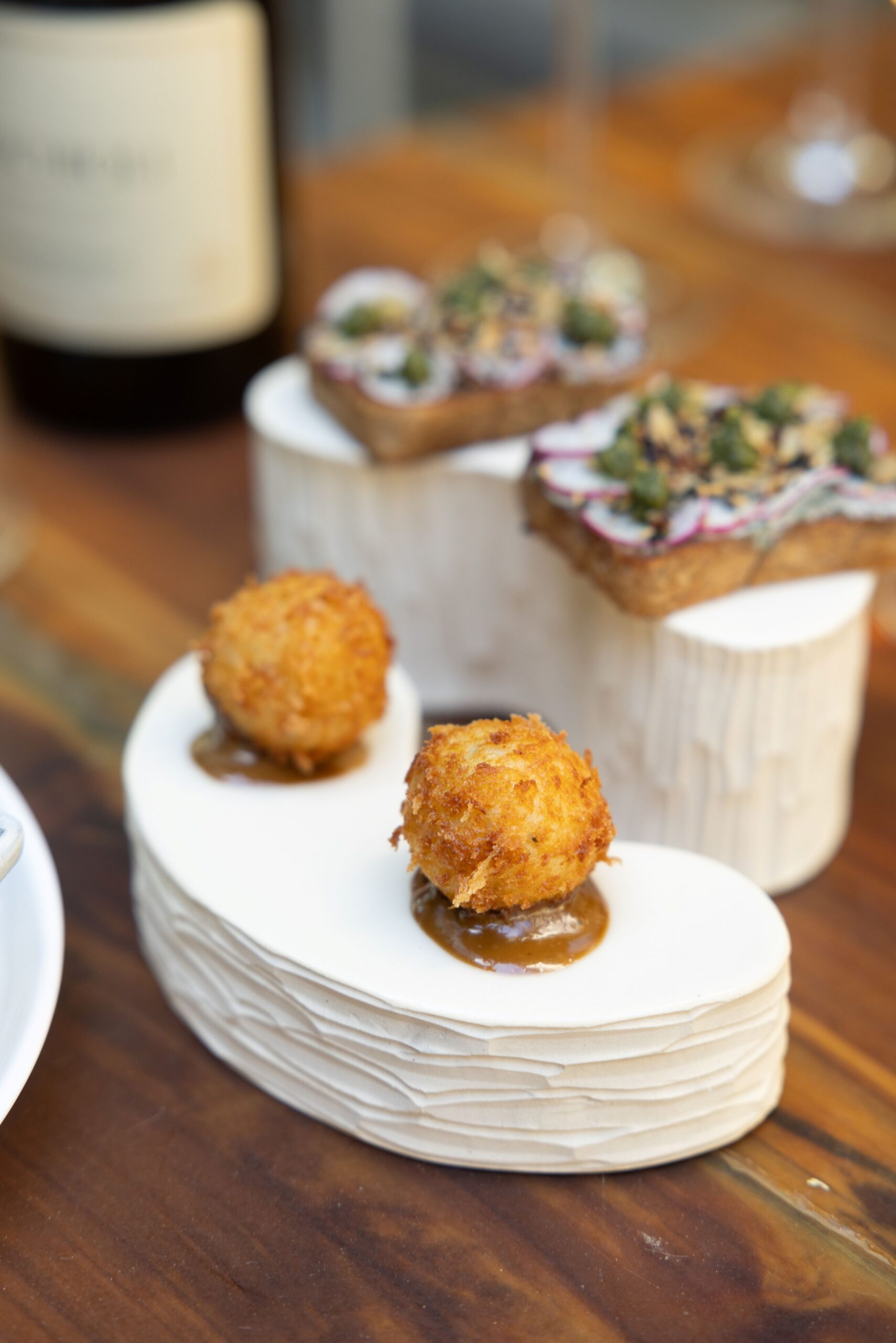
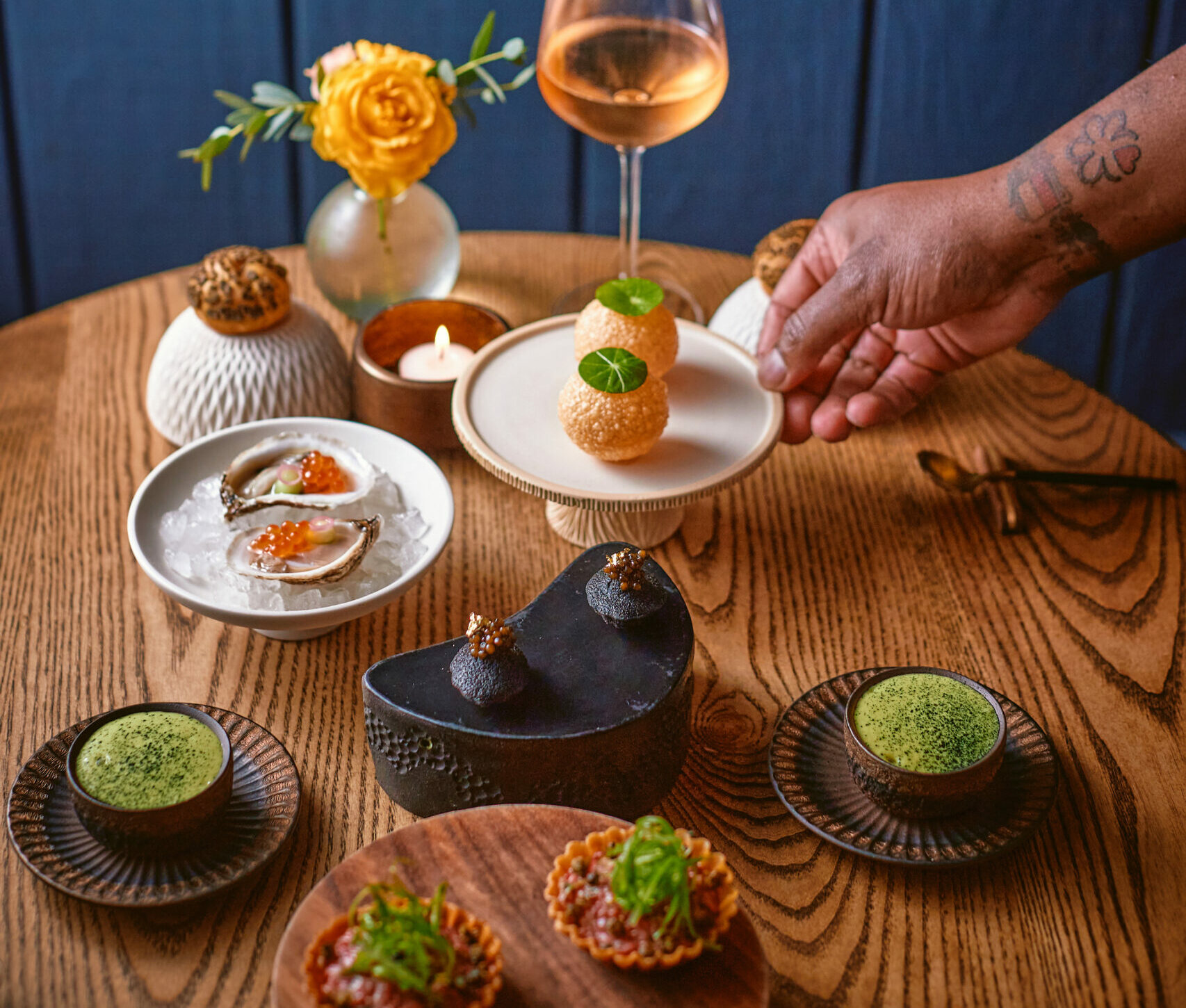
“I really like to make my pieces multifunctional,” she says. “So you get more bang for your buck.”
Years before she moved to Healdsburg in 2021, Park and her sister brought their mother to Wine Country for her 70th birthday, where they dined at Dry Creek Kitchen and Cyrus, both of which are now clients. “They are just so important,” she says, “because they’re part of my origin story.”
“I feel like it elevates what we’re doing, and it’s a conversation starter,” Shane McAnelly, executive chef of Dry Creek Kitchen, says of Park’s work. “We have little cards one of our managers made that talk about Jee’s background, so when people ask about it—which happens with relative frequency—we can bring those out and plug her.”
While her local ties have proved fruitful, a farther-flung place also lingers in Park’s consciousness. She named her studio Seoul Sister in part to recognize her Korean heritage, and she cites “Irworobongdo,” a screen painted with a landscape of mountains, sky, and water traditionally placed behind the royal throne in Korea, as a touchstone.
“The Korean people are supposed to be like the water in that painting, where you overcome the obstacles,” she says. “Nothing stops water, right? And it may not [take] a direct path, which my life has definitely not been a direct path.”
Water flowing over and around rocks, rarely taking a straight line, but always winding to its inevitable destination—it’s a description that fits not only Park’s journey, but also Allen’s, and perhaps the entire discipline of ceramics.
“When I got started,” Allen remembers, “and pieces weren’t coming out the way I wanted, I often would tell myself, ‘Well, the clay’s going to tell me what it wants to be today.’ And that was it.”