






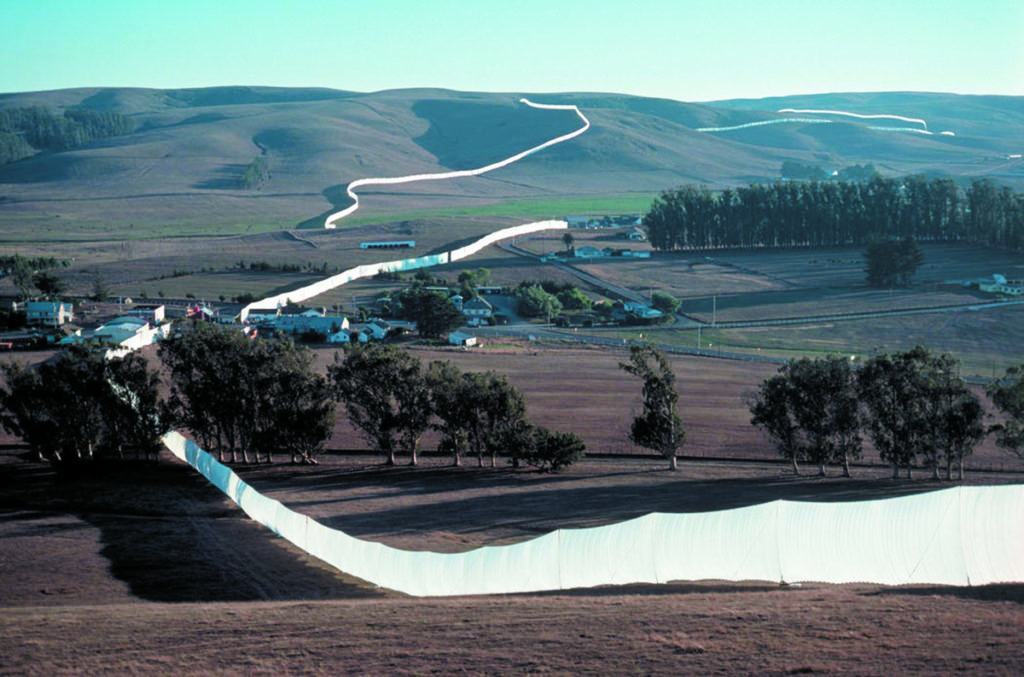
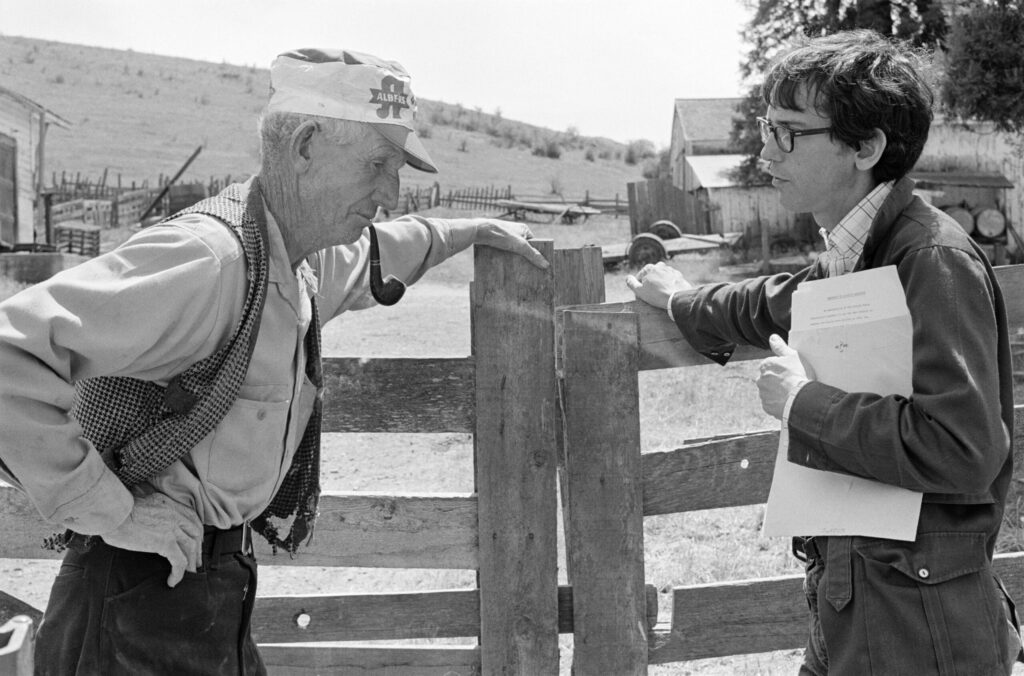
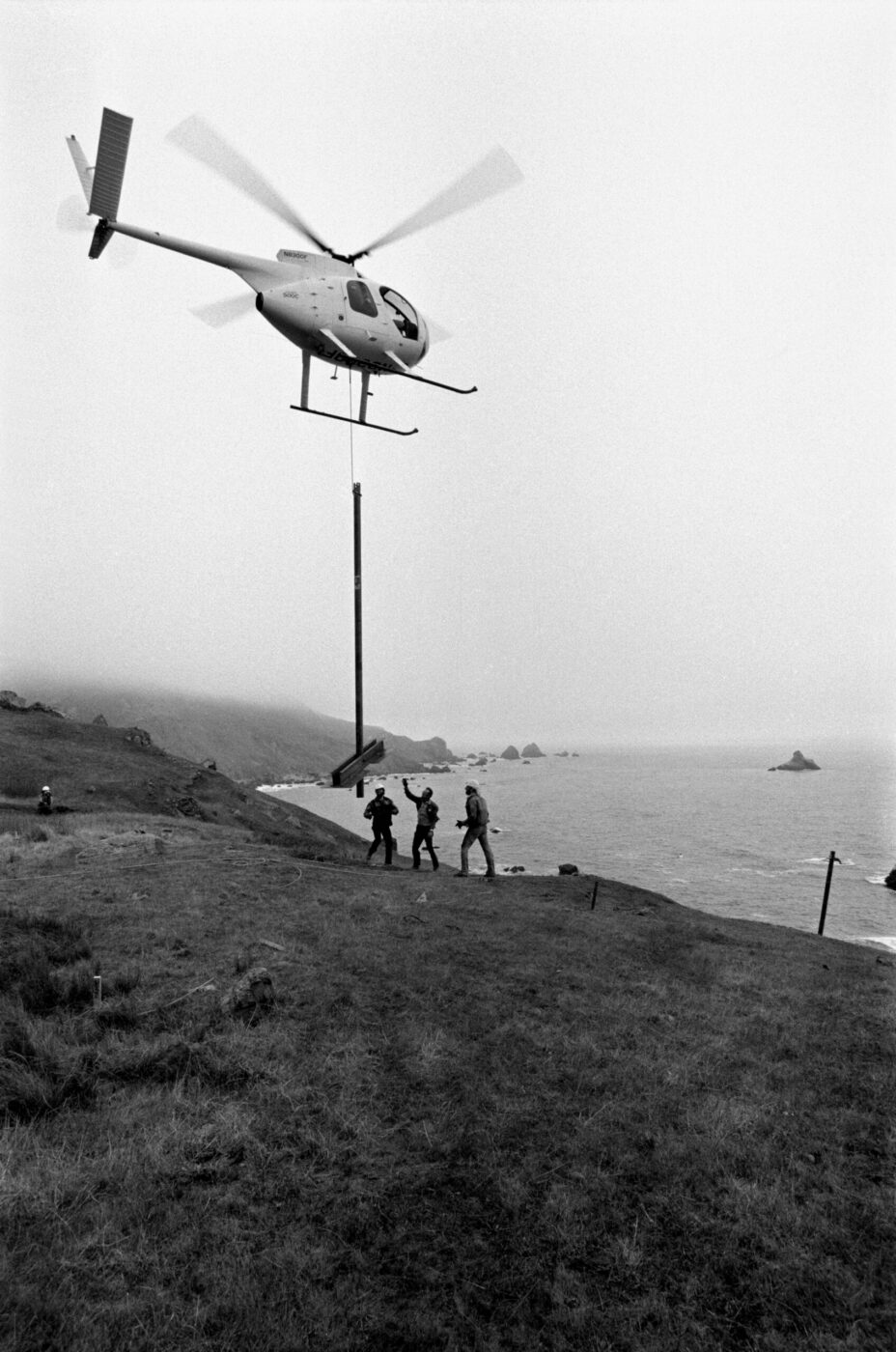
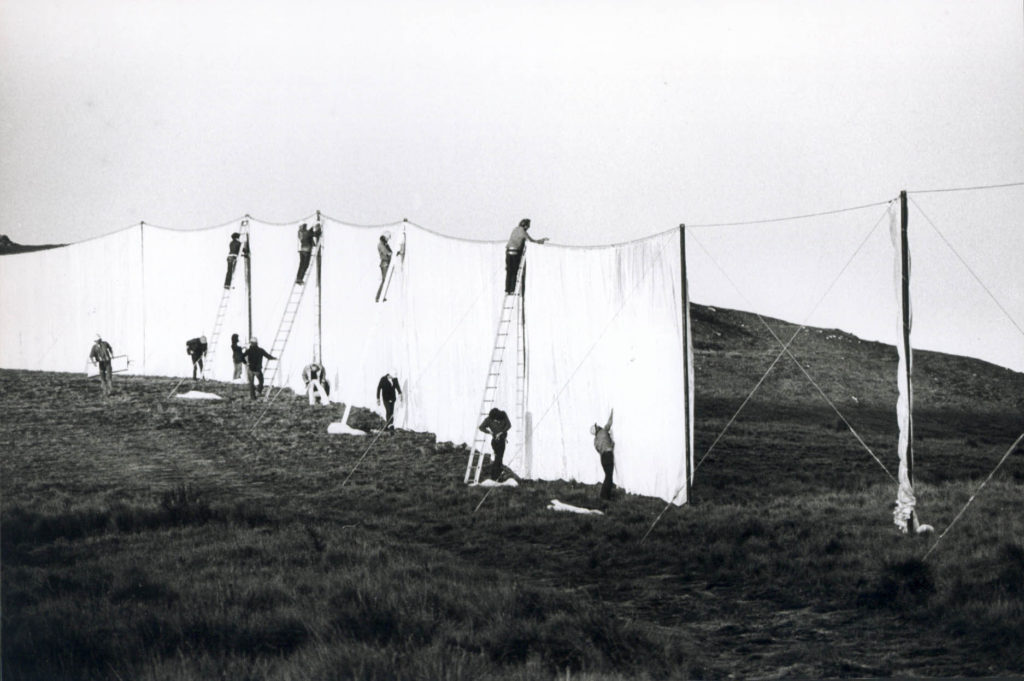
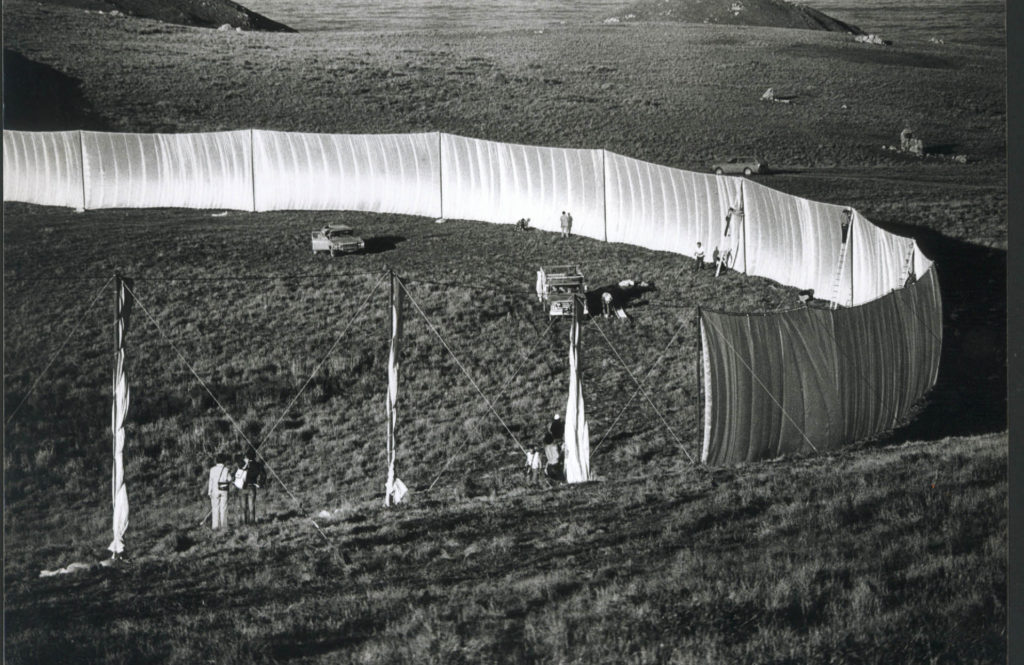

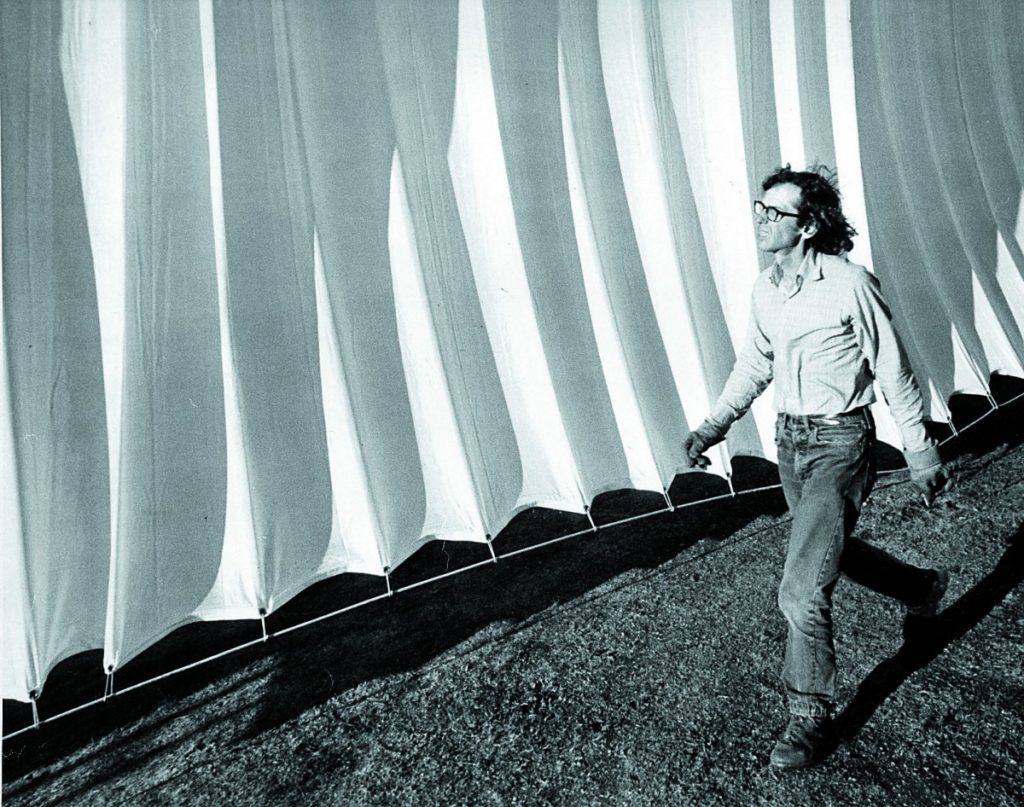
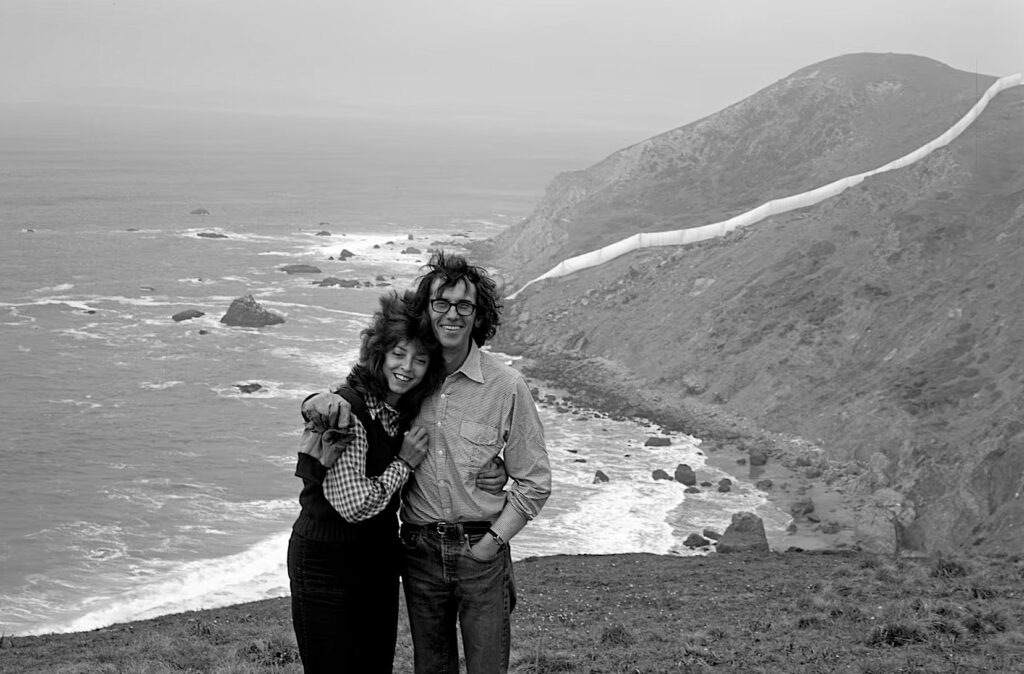
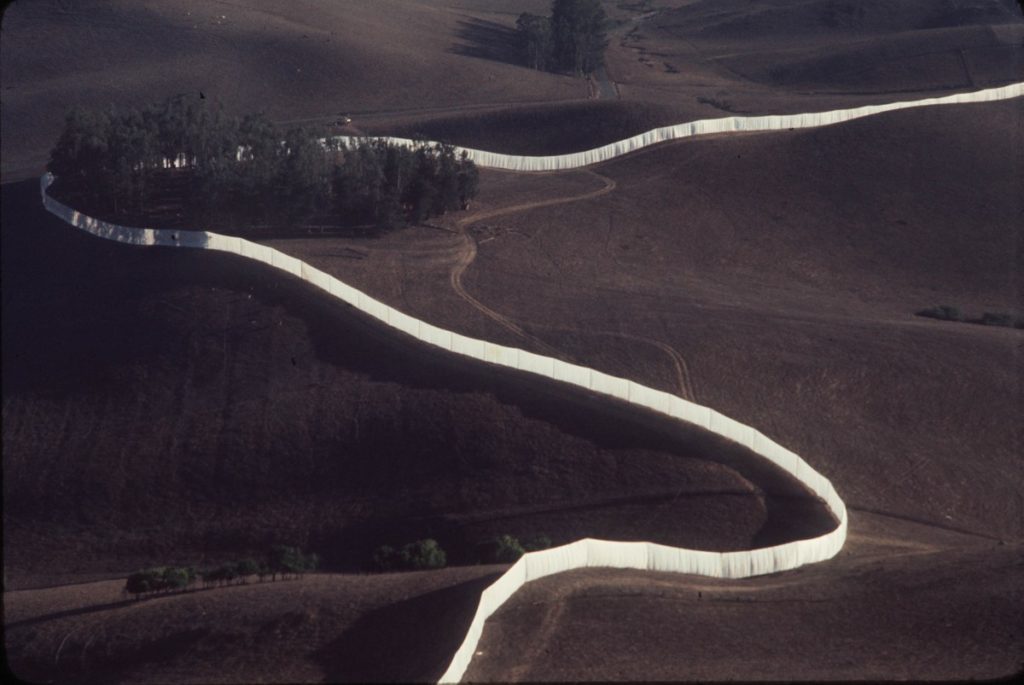
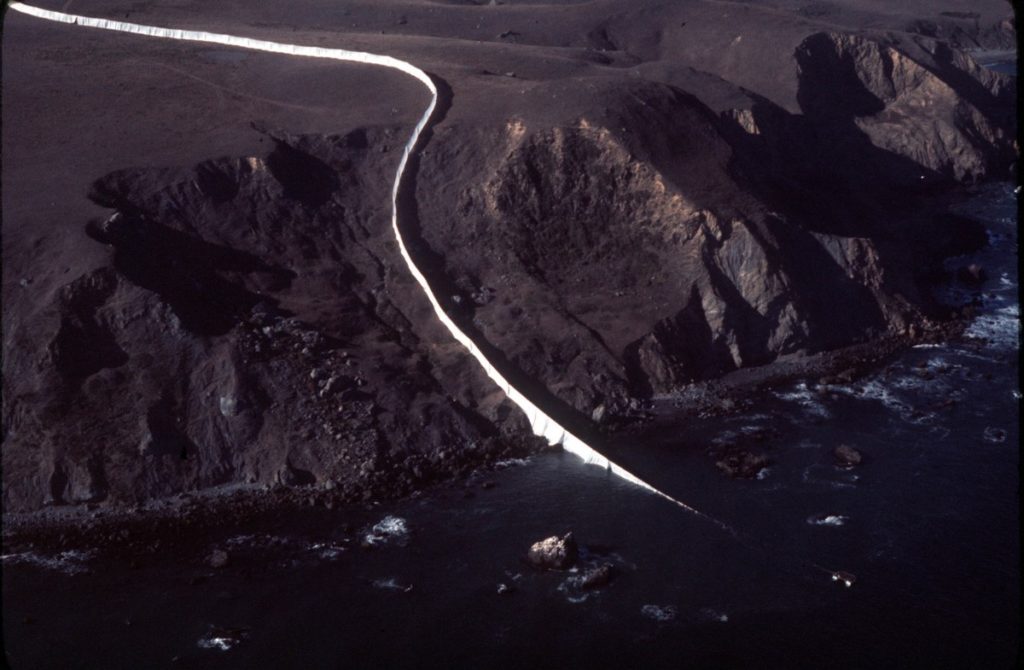

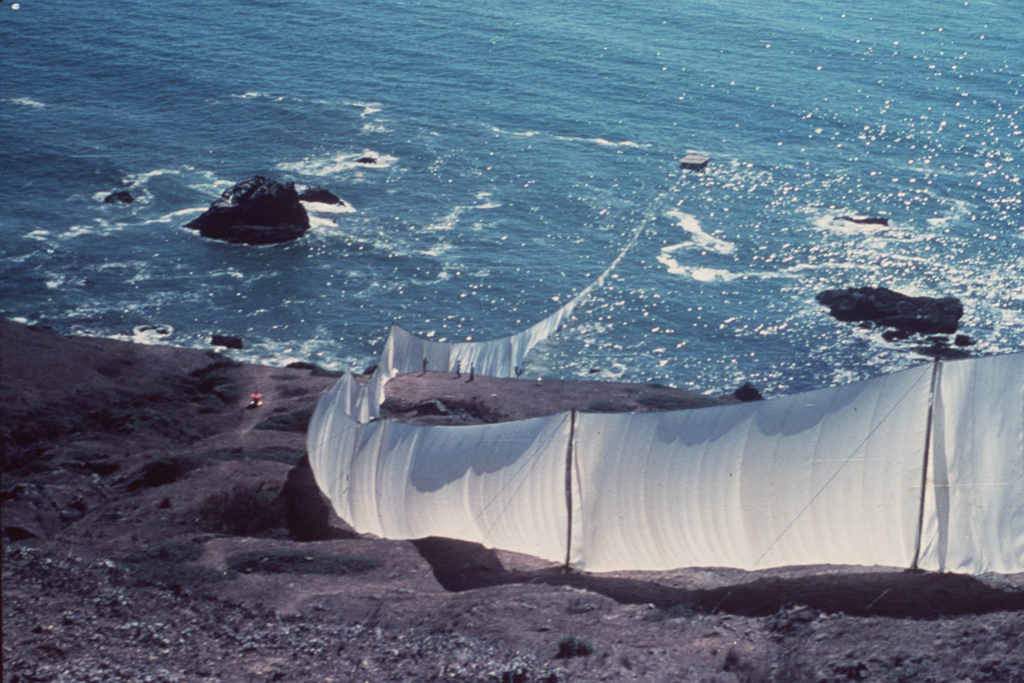
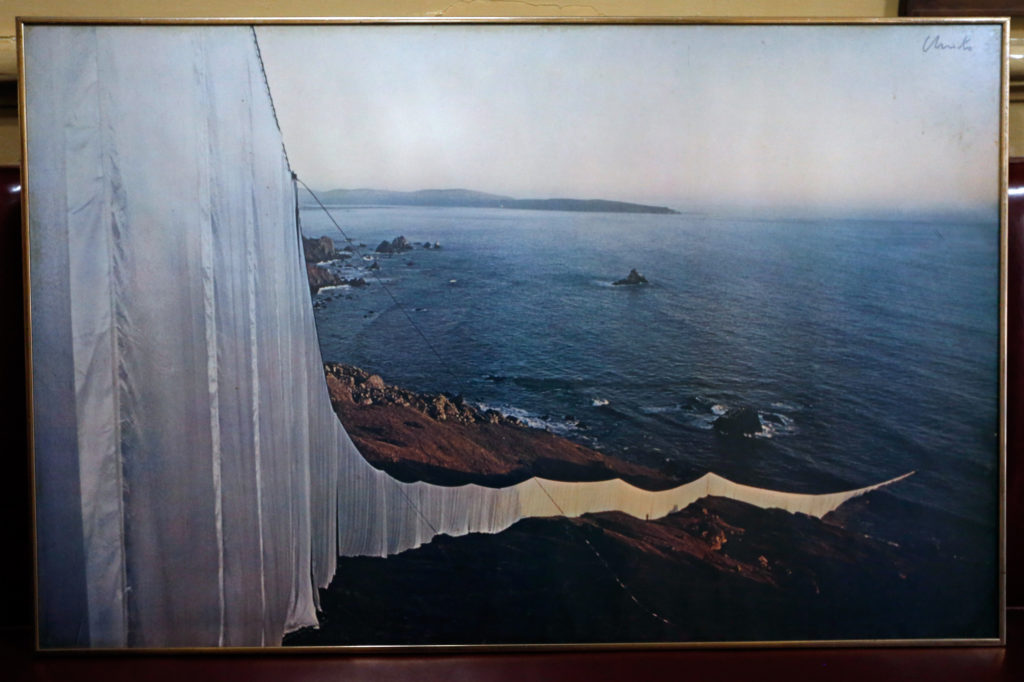

Imagine trying to tell the story of “Running Fence” to the uninitiated. It might go something like this: Back in the early 1970s, two little-known immigrant artists landed in rural west county like a pair of aliens descending from a UFO. Driving down gravel roads and knocking on ranch-house doors, they sat at kitchen tables sharing their bizarre vision of running an 18-foot-high white fabric fence 24 1/2 miles across dozens of ranches into the Pacific Ocean.
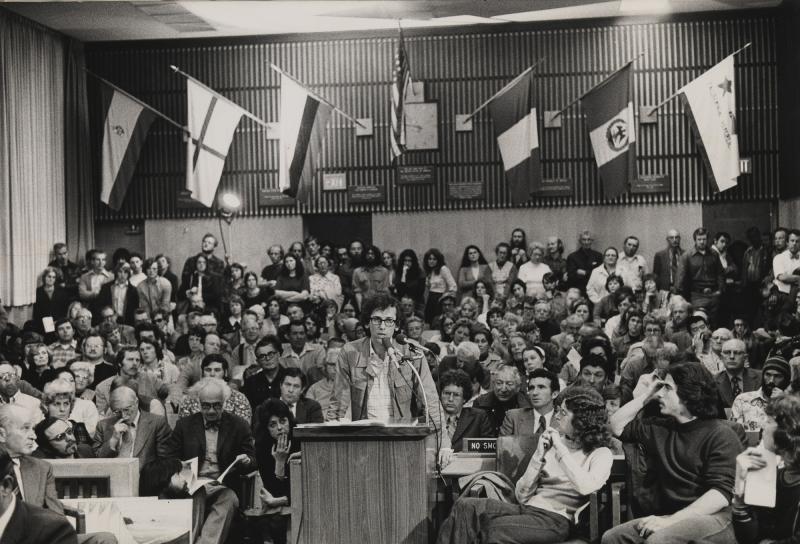
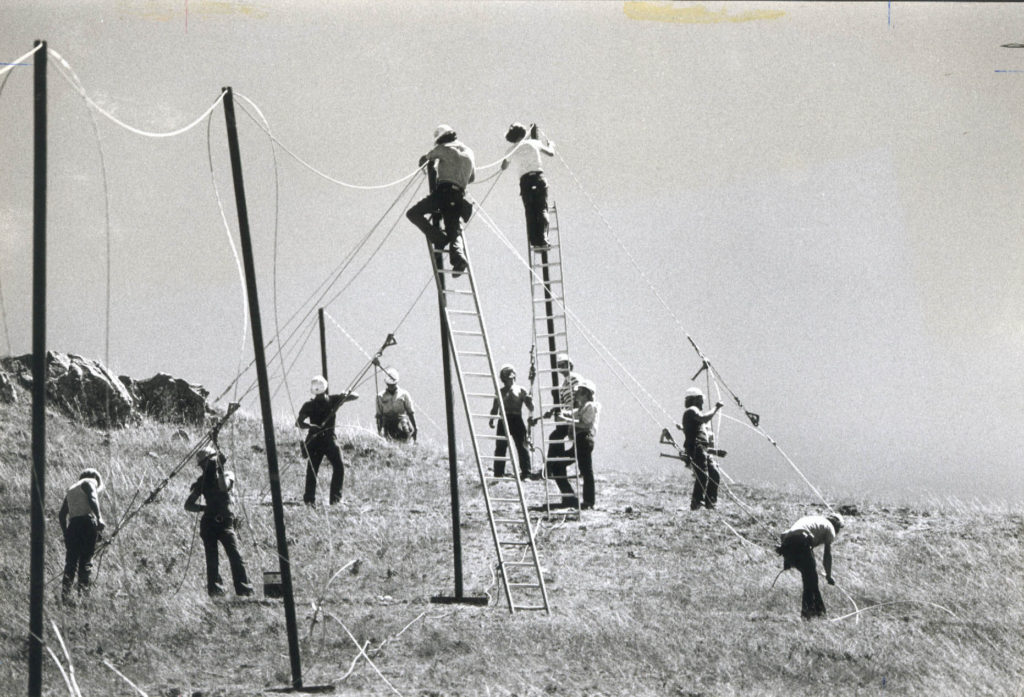
One by one, they began to convince ranchers this was a good idea. In countless community meetings, environmentalists, artists, and politicians quickly rose up in opposition. But the pair of outsiders persisted, and in 1976 after a four-year battle, Christo Vladimirov Javacheff and Jeanne-Claude Denat de Guillebon — or simply Christo and Jeanne-Claude — realized their pipe dream: A shimmering white nylon ribbon running across 59 ranches from Valley Ford to Bodega Bay for a grand total of two weeks. In a case of unlikely bedfellows, the artists’ biggest allies turned out to be the downhome ranchers who didn’t like environmentalists and big government telling them what they could do with their land.
Five decades later, it’s still hard to believe it really happened, and even harder to imagine something so ephemeral could last so long in the minds of those who witnessed it.
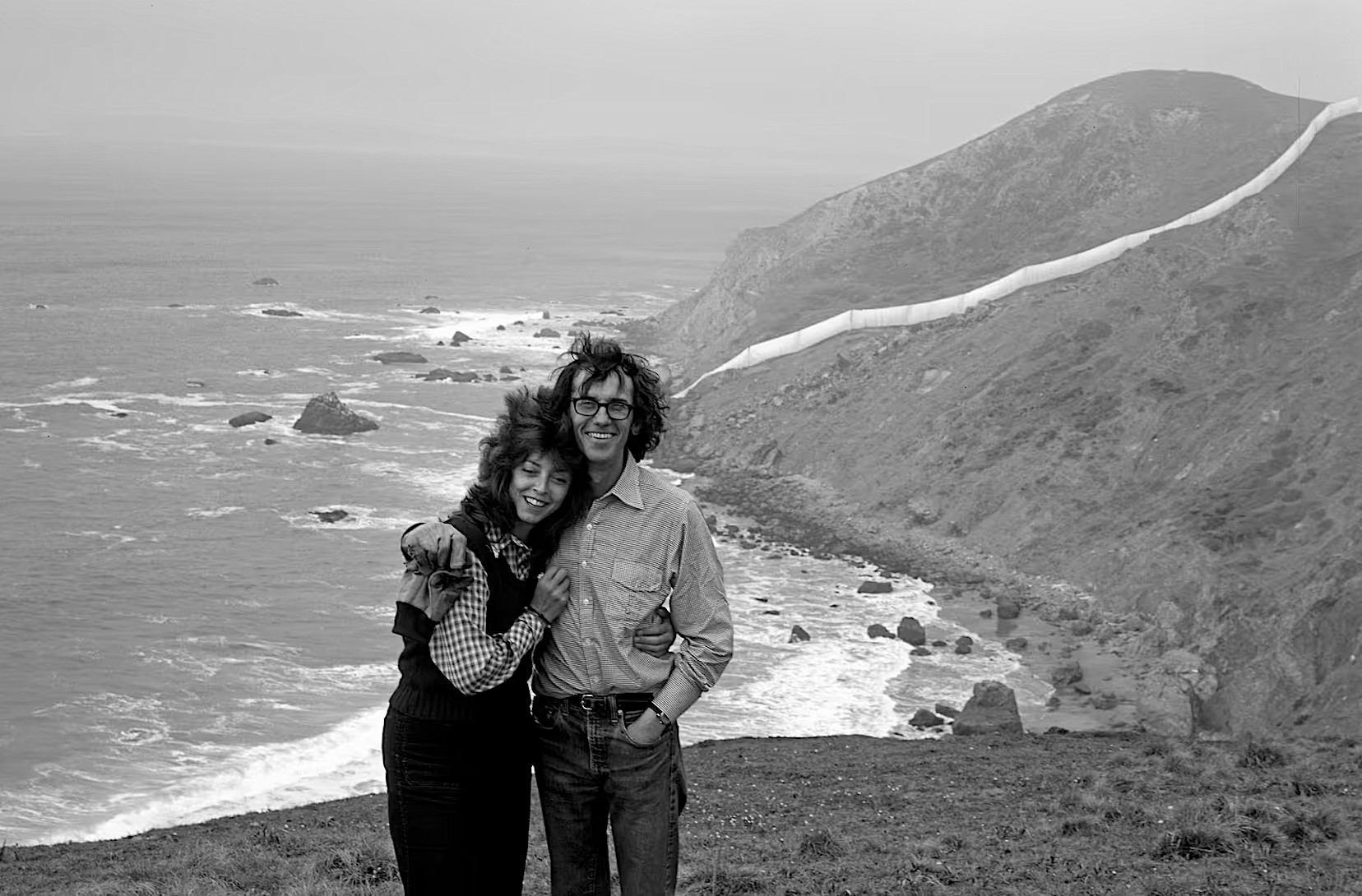
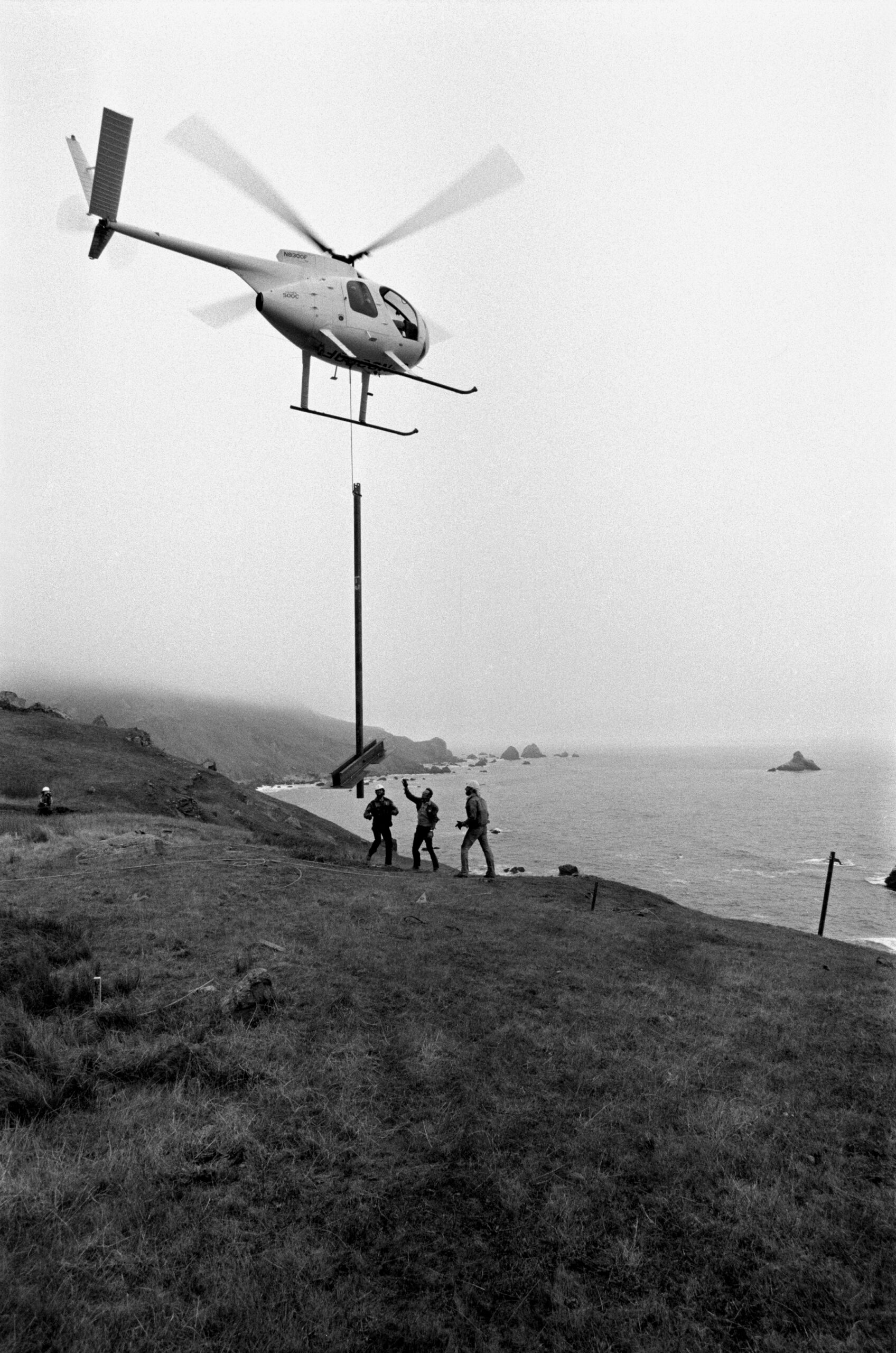
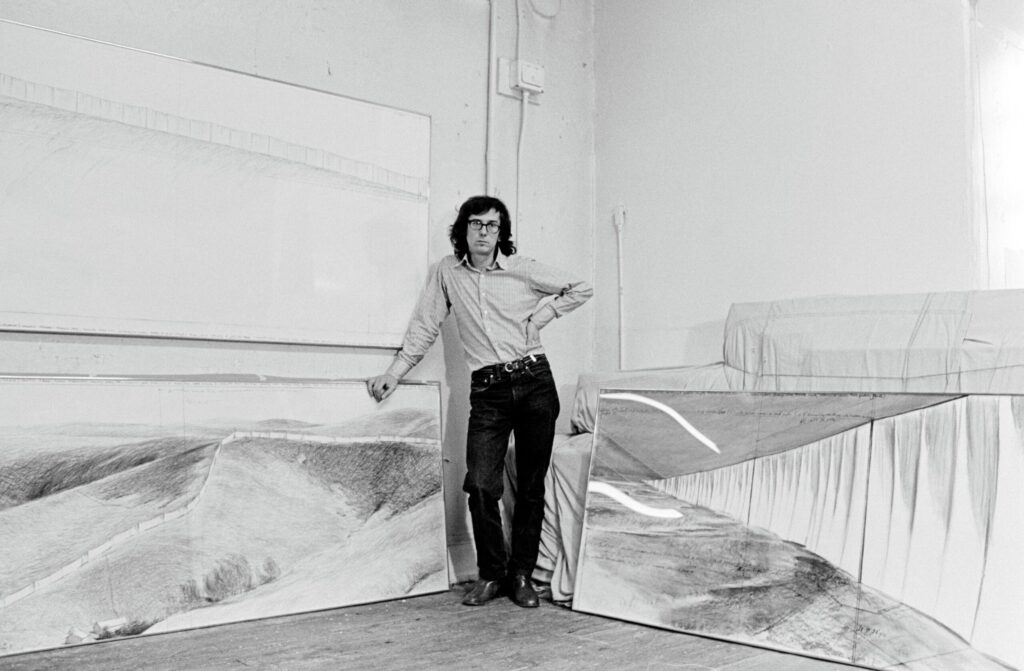
As both proof and paean to what transpired, the Museum of Sonoma County has mounted the landmark exhibition “Christo and Jeanne-Claude: Running Fence at 50 Years.” It includes fabric and poles from the original installation, Christo’s artwork, and a video re-creating how it billowed and rattled in the wind.
Curator Jennifer Bethke loves the backstory as much as the art itself. “I’m a total sucker for the people who were like, ‘It’s not art, it’s a curtain, right? It’s a roll of toilet paper.’ The controversy was fascinating to me,” she says.
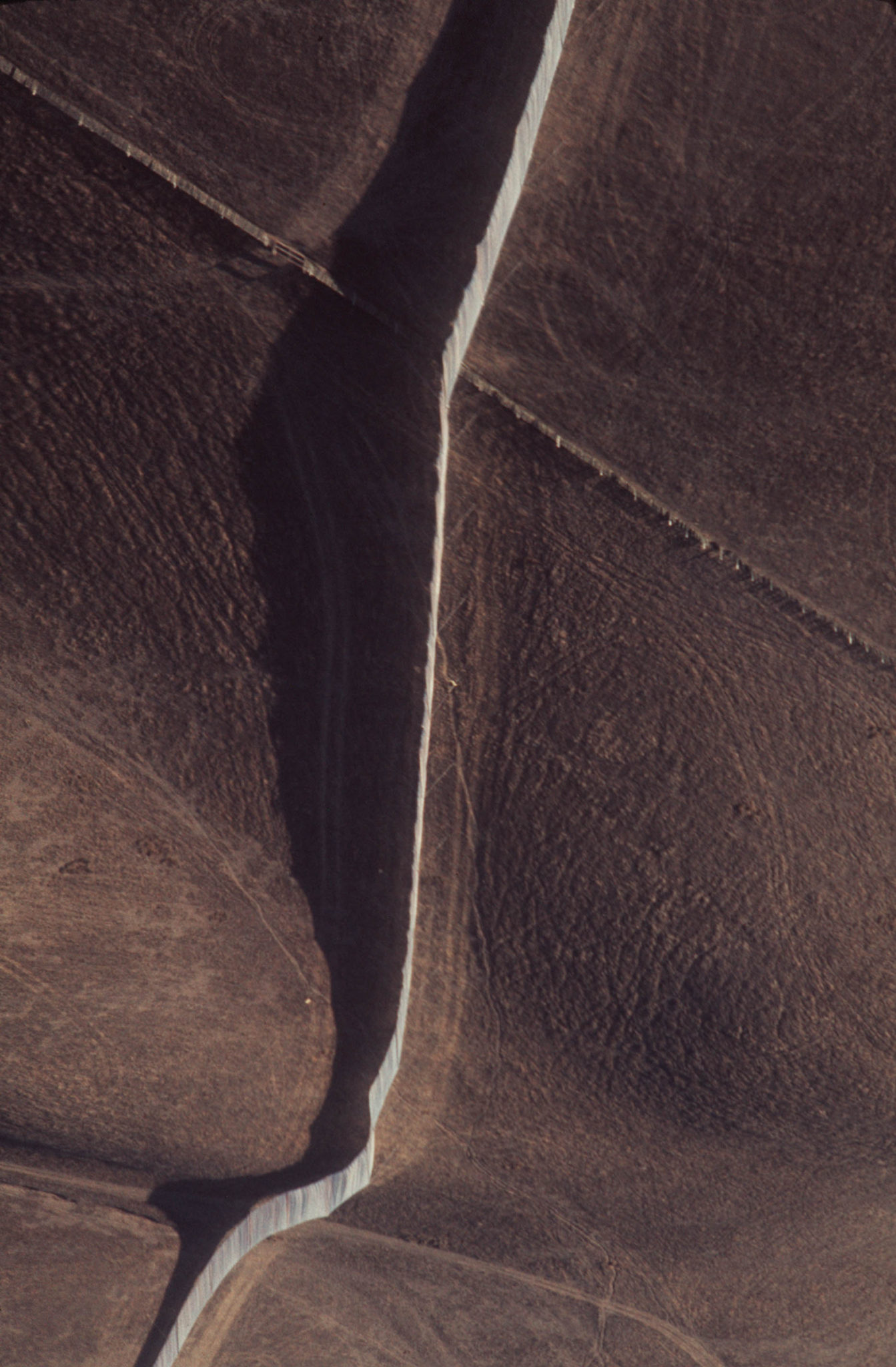
Jeanne-Claude died in 2009 and Christo in 2020, but their vision lives on in the stories we continue to tell, long after the disassembled fence was donated to ranchers who used it to cover manure piles. They recast the poles as fencing, later giving away nylon panels that unfurled in a trail of fabric across the country, including from the rafters of the Monte Rio Theater.
The biggest epiphany was that it wasn’t just the fence that was the art: It was the theater of controversy, the conversations, and the consternation leading up to its installation. As Christo said at a particularly contentious meeting, “Like it or not, you are all a part of my art.”
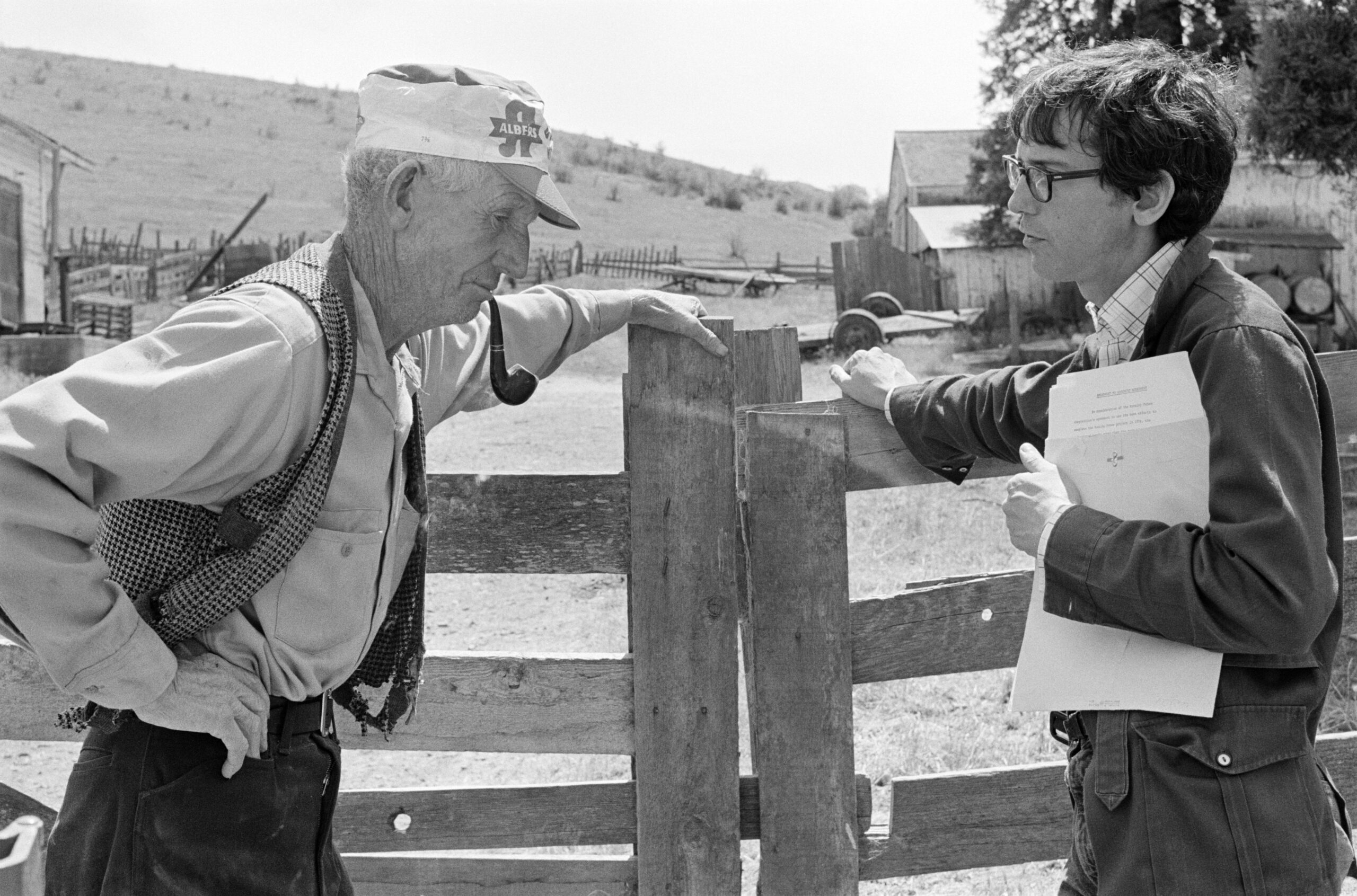
Fifty years later, we’re still playing our roles, sharing stories and reflections. Union Hotel co-owner Barbara Gonnella, who grew up on Pozzi Ranch in Valley Ford, remembers it like it was yesterday. “It danced in the wind, and you could hear the poles whipping, especially on our ranch because it was very windy right before it cascaded into the Pacific. The sounds and the magic of the project were just timeless, but the friendships are even deeper. They’re as powerful as the art.”
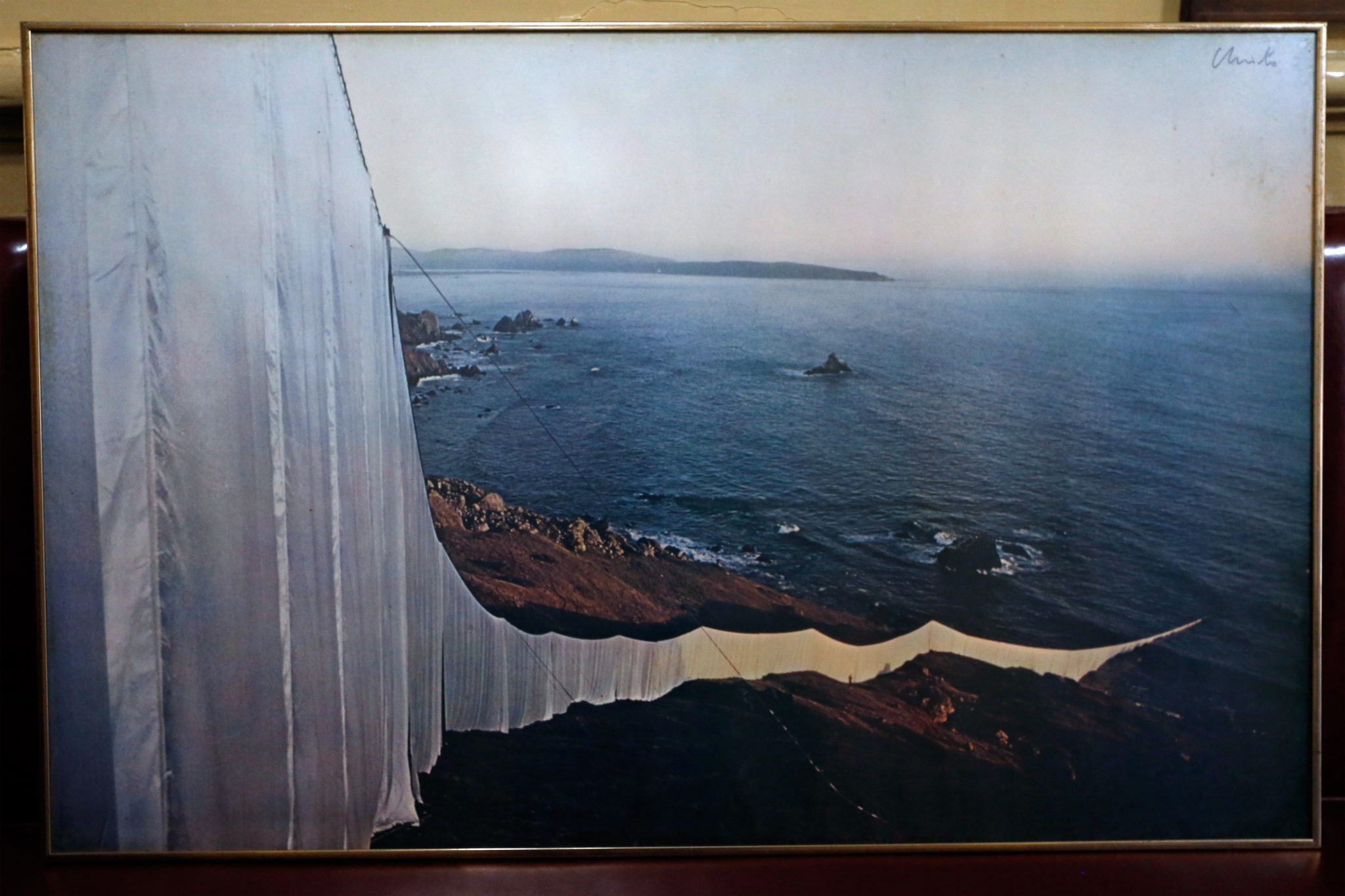
Rumor has it there’s a 100-year time capsule buried near the Valley Ford Post Office. In 2076, when it’s pried open, there’s no doubt we’ll be buzzing about it all over again, playing our roles in the timeless art project that keeps running and running and running.
Christo and Jeanne-Claude: Running Fence at 50 Years
June 27 through Nov. 8 at Museum of Sonoma County. 425 Seventh St., Santa Rosa. museumsc.org