









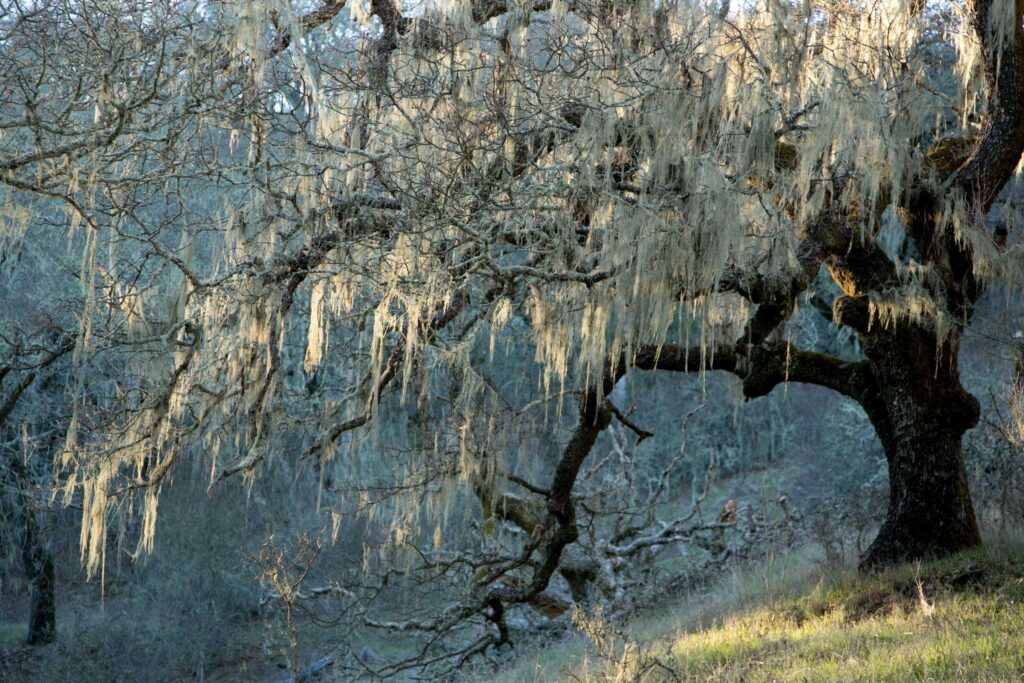
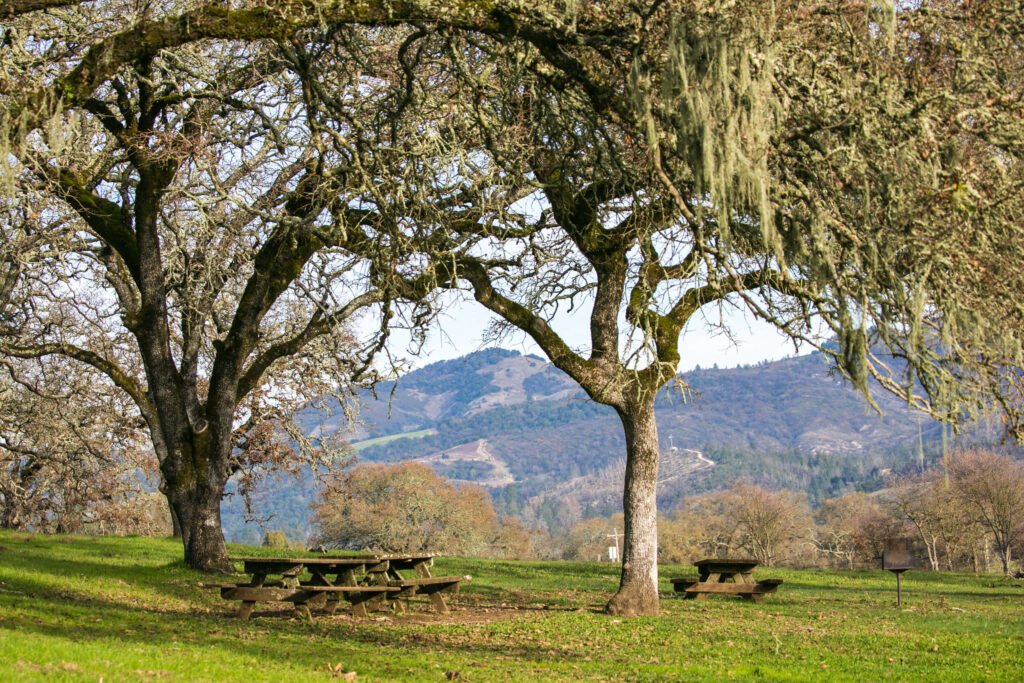
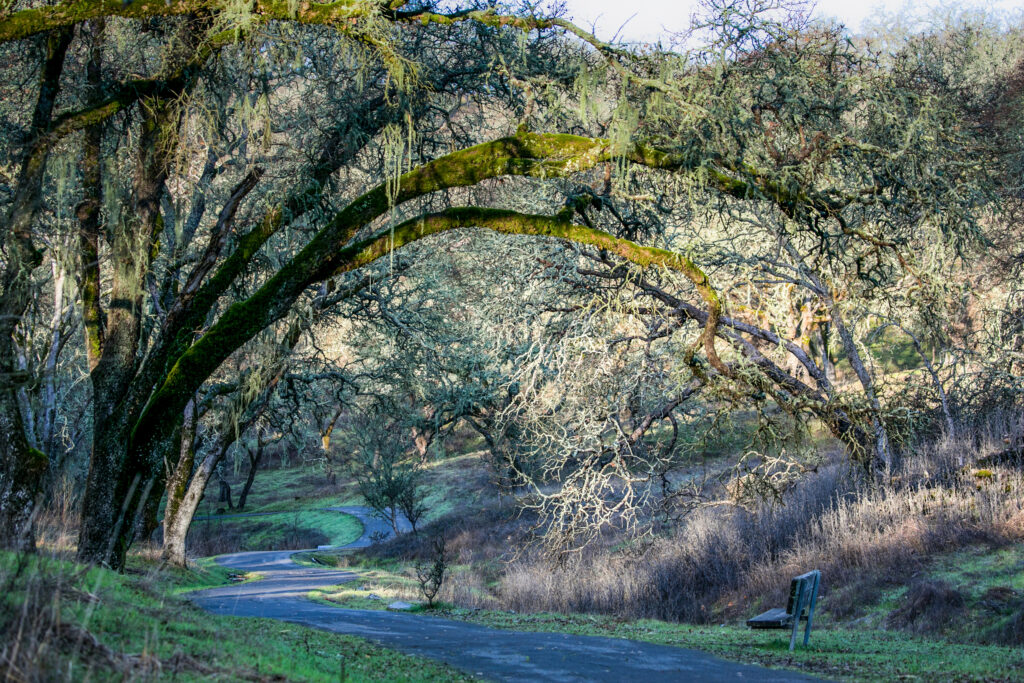
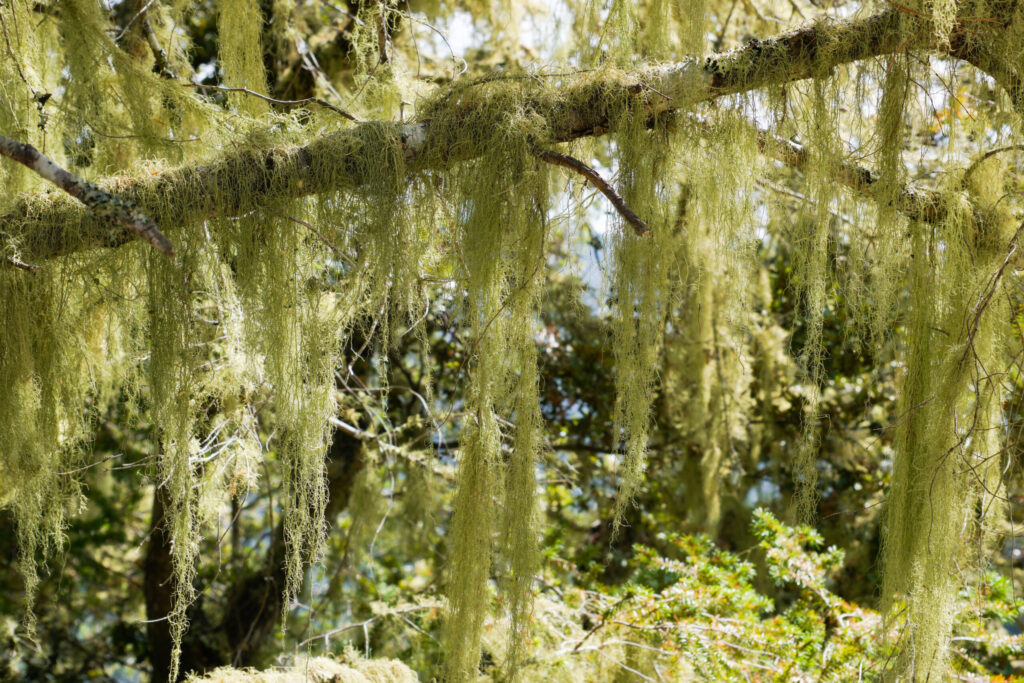

Two-in-one and one-of-a-kind; misunderstood and misidentified; generally mysterious and undoubtedly magical: that is lace lichen. Some think it causes harm, like a parasite. Not true, says Sebastopol lichenologist Shelly Benson. Others call it Spanish moss (which doesn’t grow in California) or old man’s beard (which does, but looks different — less lacy).
Inscrutable, perhaps — but also ubiquitous. Lace lichen ornaments trees throughout Sonoma County and the entire West Coast from Baja California to British Columbia. It was named California’s state lichen in 2015 and remains the only thus-honored lichen in the nation.
Early spring is a good time to become acquainted with Ramalina menziesii, not because of what it’s doing, but because of what it isn’t. Lace lichen is an iconoclast. It doesn’t flower like everything else in spring, Benson says. Nor does it die off in fall or go dormant in winter.
“[Lichen] don’t have a particular bloom. And they’re not like fungi that emerge after rains and they’re ephemeral,” she says. “That’s the great thing about being a lichenologist. You can look at them every month of the year.”
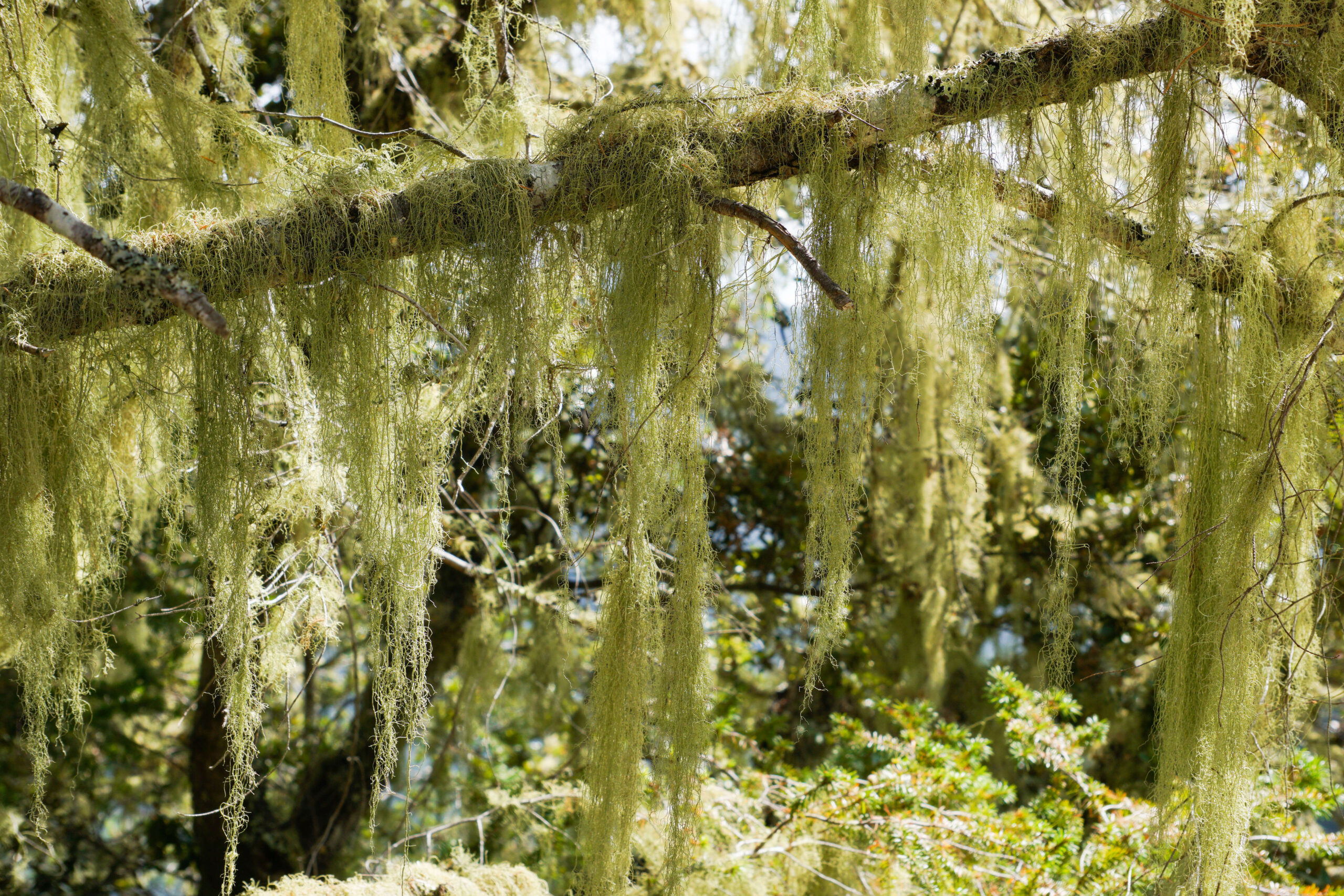
Instead of following the seasons like most plants and animals, lace lichen marches to the beat of its own drum, a beat that goes drip-drip-drip.
“Lichens grow when they’re wet,” Benson says, “and when they dry out, they go into a state of dormancy.” In spring, local lace lichens are fat and happy after months of rain and damp air. In summer, they will be sustained by coastal fog.
Benson explains that reproduction also happens year-round, in two different ways: asexually, through fragmentation, and sexually, through spore release.
Lace lichen grows on many different trees and shrubs. Beyond being harmless, it can actually help, especially during summer, by catching moisture from fog that then precipitates down to hydrate the soil and roots below. Birds use it for nesting, and deer have been known to munch on it. Plus, it just looks cool — especially this time of year, draped like a shawl over the budding branches of a black oak or box elder.
But what is “it,” anyway? Like all lichen, it’s not one species but two, living together in symbiosis: a fungus, Ramalina menziesii, which provides structure, and an alga, Trebouxia, which provides energy via photosynthesis.
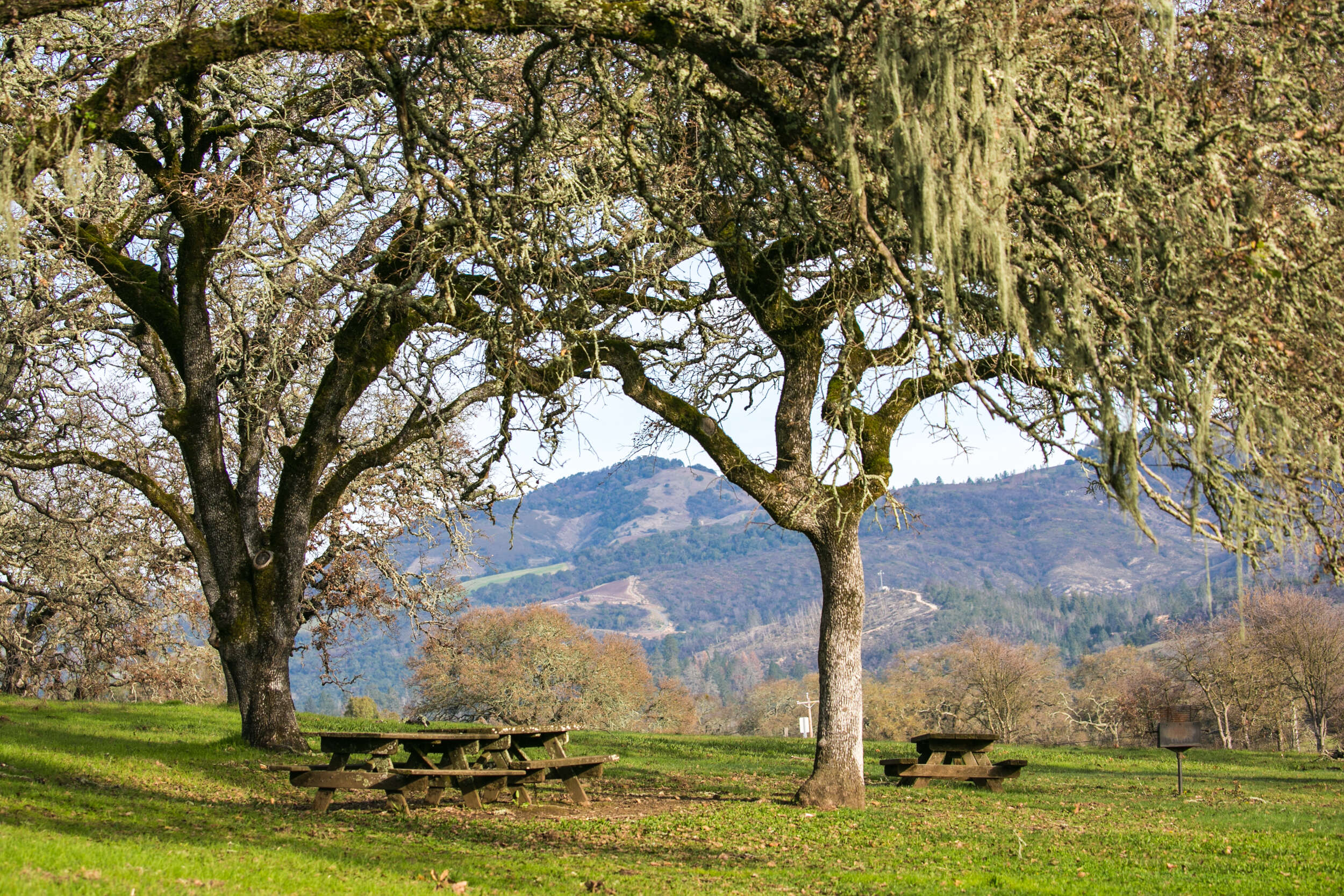
So this spring, while you’re out enjoying all those colorful, predictable, single-species wildflowers, be sure to also look up, into the trees, for another wonder all its own.
Where to see lace lichen
- Spring Lake Regional Park, Santa Rosa
- Sonoma Valley Regional Park, Glen Ellen
- Ragle Ranch Regional Park, Sebastopol
- Healdsburg Ridge Open Space Preserve, Healdsburg